 Tools
Tools
 Hyperbaric Treatment of Radiation Proctitis
Introduction
Pelvic radiation therapy is employed in the management of various cancers, including ovarian, uterine, cervical, prostate, bladder, and rectal malignancies. Exposure to radiation can cause injury to the gastrointestinal tract, although the therapy remains effective in controlling cancer. Hyperbaric oxygen therapy (HBOT) addresses this challenging complication by promoting tissue oxygenation, angiogenesis, and mucosal healing in irradiated gastrointestinal tissue.
Etiology
Register For Free And Read The Full Article
 Search engine and full access to all medical articles
- 10 free questions in your specialty
- Free CME/CE Activities
- Free daily question in your email
- Save favorite articles to your dashboard
- Emails offering discounts
Learn more about a Subscription to StatPearls Point-of-Care
Etiology
Radiation proctitis, defined as damage to the lower colon, represents soft tissue radionecrosis and a delayed effect of therapeutic radiation. The condition is considered a sequela of radiation-induced, progressive, obliterative endarteritis, resulting in reduced small blood vessels within the affected tissue, chronic mucosal ischemia, submucosal fibrosis, progressive epithelial atrophy, and formation of new vessels (telangiectasia). Radiation proctitis typically manifests 6 months to several years after radiation exposure.[1]
Epidemiology
The incidence of chronic radiation proctitis after exposure to pelvic radiation doses exceeding 5,000 cGy ranges from 1% to 5%. Some reports indicate an incidence as high as 10%, with a study demonstrating a rate of significant radiation proctitis (grade 2 or higher) of 40%. Notably, the use of angiotensin-converting enzyme inhibitors produced a substantial reduction in the occurrence of this condition.[2]
Pathophysiology
Late radiation changes produce friable, inflamed mucosa (mucositis), which can result in ulcerations and bleeding that occasionally require recurrent transfusions. Strictures and fibrosis may develop, causing intestinal obstruction and fistula formation, both of which are associated with significant morbidity.
Histopathology
Histopathological findings include arteriolar endarteritis and connective tissue fibrosis. Gross findings include mucosal friability, pallor, telangiectasias, strictures, fistulas, and ulcerations.
History and Physical
Signs and symptoms of radiation proctitis include hematochezia, mucus discharge, diarrhea, tenesmus, and fecal incontinence.[3] Patient history should include a detailed radiation therapy report, as radiation proctitis is uncommon with doses below 5,000 cGy. Physical examination may reveal perirectal fistulas, anal ulceration, and a fibrotic rectum with associated mucus and blood.
Evaluation
Assessment of radiation proctitis requires consideration of the patient’s initial malignancy history to evaluate for potential cancer recurrence. Clinical evaluation includes digital rectal examination and proctoscopic examination. Colonoscopy is indicated to delineate the extent of inflammation and ulceration and to exclude malignancy (see Image. Moderate-to-Severe Radiation Proctitis on Colonoscopy). Biopsies are generally avoided, as they do not contribute to the diagnosis and carry a risk of severe rectal wall injury, which may result in necrosis or fistula formation.
Treatment / Management
The American Society of Colon and Rectal Surgeons’ clinical practice guidelines for chronic radiation proctitis recommend HBOT as an effective modality to reduce bleeding. The society strongly supports this therapy based on moderate-quality evidence.[4]
HBOT is believed to improve long-term tissue oxygenation through angiogenic effects. The therapy also promotes reepithelialization and stimulates collagen formation. Successful resolution of radiation proctitis typically requires 30 to 40 treatment sessions. HBOT is generally well tolerated, with favorable outcomes in more than 85% of patients. Symptom relief occurs in 89% of patients and is sustained for 6 to 12 months posttreatment.[5] A meta-analysis of 22 clinical studies, including 6 randomized controlled trials involving 1,318 subjects, demonstrated that HBOT reduces gastrointestinal symptoms, promotes mucosal repair, decreases inflammation, and enhances immune function in patients with radiation enteritis, a condition closely related to radiation proctitis.[6](A1)
HBOT can serve as an adjunct to other therapies for chronic radiation proctitis, including formalin application, sucralfate retention enemas, 5-aminosalicylic acid derivatives, probiotics, antioxidants, antibiotics, and endoscopic argon plasma coagulation. Sucralfate enemas are highly efficacious, inexpensive, and well tolerated, representing a preferred 1st-line option. HBOT may be administered concurrently with these therapies or following their failure.[7][8](A1)
A 10-year retrospective analysis reported complete symptom resolution in 62% of patients. At least partial symptom resolution occurred in 94% of patients.[9](B2)
Treatment courses typically involve 20 to 30 HBOT sessions at 2 to 2.5 ATA for 60 to 120 min/day. Nutritional support and local therapy in combination with HBOT may reduce complications and alleviate symptoms in patients with moderate-to-severe disease.[10]
Bowel surgery carries a high complication rate, exceeding 70% in some series.[11] Preoperative HBOT significantly reduces postoperative complications and increases the likelihood of successful resolution.(B2)
Differential Diagnosis
Clinicians must exclude the possibility of cancer recurrence. Symptoms alone cannot reliably distinguish radiation proctitis from more significant pathology. In a study of 171 patients presenting with rectal bleeding after radiation therapy, 141 were diagnosed with radiation proctitis. The study identified 95 additional diagnoses, including 8 cases of cancer and 9 high-risk adenomas.[12]
Radiation Oncology
Acute proctitis develops within the first few months of radiation treatment in 10% to 15% of patients and is typically self-limited, lasting only a few months. The condition involves inflammation of the rectal mucosa, with loss of microvilli, edema, and ulceration. Common symptoms include abdominal pain, tenesmus, diarrhea, incontinence, and urgency.[13]
Chronic proctitis, frequently associated with bleeding, develops months to years after radiation treatment and often follows a progressive course. Risk factors for chronic proctitis include severe acute proctitis, diabetes mellitus, inflammatory bowel disease, connective tissue disease, hypertension, smoking, peripheral vascular disease, and chemotherapy.
Early loss of anterior rectal wall glandular tissue after radiation therapy predicts subsequent development of radiation proctitis. Maintaining the radiation dose to this area below 52 Gy is recommended to reduce risk.[14]
Pertinent Studies and Ongoing Trials
HBOT may serve as a preventative strategy for soft tissue radiation effects like radiation proctitis. Radiation induces significant elevations of oxidative stress, antioxidants, and profibrotic factors, which are completely reversed and normalized by HBOT in animal studies.[15] The therapy may prevent radiation-induced tissue changes by modulating oxidative stress and inflammatory cascades.
Hydrocortisone enemas are associated with a significant reduction in the severity of acute radiation proctitis and may also decrease the development of late effects.[16] Machine learning models using clinical and dosimetric data may predict and guide prevention strategies for radiation proctitis.[17]
A recent update of the original Cochrane Review on HBOT for late radiation tissue injury indicates that HBOT in radiation proctitis may improve outcomes, reduce the risk of wound dehiscence, and provide modest pain reduction. No effect on short-term mortality was observed. The review recommends further research on optimal treatment timing and dosing.[18]
Treatment Planning
Patients typically require 30 to 60 HBOT sessions, depending on disease severity. Sessions are generally conducted daily for 90 minutes at hyperbaric pressure. Treatment pressures vary among providers, ranging from 1.5 to 2.5 ATA. Limited research exists regarding optimal treatment pressure and protocol.
Toxicity and Adverse Effect Management
Patients who cannot equalize their ears may elect to undergo bilateral venting tube myringotomies. This procedure helps prevent significant otic barotrauma.
Medical Oncology
Colonoscopy after radiation therapy for prostate cancer is supported by rationale and data to screen for colorectal cancer and chronic radiation proctitis. Annual screening revealed a high incidence of asymptomatic radiation proctitis.[19] Endoscopy following postoperative radiation therapy for rectal cancer may identify patients at risk for developing radiation proctitis. The presence of telangiectasias was particularly predictive of subsequent disease.[20]
Prognosis
Hospitalization for radiation proctitis is associated with an inpatient mortality rate of approximately 2%.[21] A randomized, controlled, double-blind, crossover trial demonstrated significant improvement in refractory radiation proctitis with HBOT compared with control. Retrospective studies report complete resolution of bleeding and urgency in approximately 50% of patients. An Australian study reported HBOT success rates of 95%.[22]
Complications
HBOT is a relatively low-risk therapy. Otic barotrauma is common but generally mild. Less frequent complications include oxygen toxicity, seizures, transient myopia, and rare cataract formation. Patients with severe structural lung disease or impaired left ventricular function are at increased risk for serious complications, including pulmonary barotrauma and acute pulmonary edema. Contraindications to HBOT include recent administration of doxorubicin or bleomycin, claustrophobia, epilepsy, severe emphysema, particularly with blebs, and certain implanted devices. Active cancer is not considered a contraindication to HBOT, despite theoretical concerns that angiogenic effects could accelerate tumor growth.[23]
Postoperative and Rehabilitation Care
HBOT may reduce complications, including anastomotic failure and wound dehiscence, in patients undergoing large or small bowel resection of previously irradiated tissue. Preoperative HBOT promotes angiogenesis and stem cell recruitment in radiation-injured tissues, reversing the hypocellular effects of late radiation injury. Postoperative HBOT reduces edema, mitigates ischemia-reperfusion injury, enhances white blood cell function, and decreases local tissue hypoxia. Typically, 20 to 30 HBOT sessions are recommended before surgery and 10 sessions after surgery in these cases.
Consultations
Gastroenterology or surgical consultation for endoscopic examination is warranted to exclude other diagnoses, including cancer or high-risk polyps. Biopsies do not aid in diagnosis and should be avoided because they carry a risk of severe rectal wall injury, which may result in necrosis or fistula formation.
Deterrence and Patient Education
Following cancer therapy, patients should be advised about the potential for soft-tissue radiation effects, including radiation proctitis. Early intervention is critical to optimize medical management and HBOT and to prevent progression to invasive procedures. Although time-intensive, HBOT is well-tolerated, low-risk, and associated with favorable outcomes.
Pearls and Other Issues
Biopsies do not contribute to the diagnosis of radiation proctitis and should be avoided due to the risk of severe rectal wall injury, including necrosis and fistula formation. Radiation proctitis may improve spontaneously over time, a factor that should be considered when planning treatment.
Enhancing Healthcare Team Outcomes
HBOT is generally more effective when initiated early. Prompt referral may reduce the need for invasive or surgical interventions.
Media
(Click Image to Enlarge)
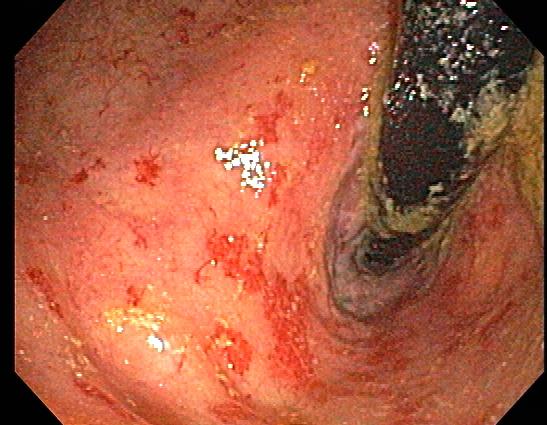
Moderate-to-Severe Radiation Proctitis on Colonoscopy. This endoscopic view shows the rectal mucosa affected by radiation proctitis, exhibiting multiple telangiectasias, erythema, friable tissue with bleeding spots, and adherent yellowish exudate. Features align with moderate-to-severe grading due to extensive telangiectasia distribution and surface involvement.
Tdvorak, Public Domain, via Wikimedia Commons
References
Vanneste BG, Van De Voorde L, de Ridder RJ, Van Limbergen EJ, Lambin P, van Lin EN. Chronic radiation proctitis: tricks to prevent and treat. International journal of colorectal disease. 2015 Oct:30(10):1293-303. doi: 10.1007/s00384-015-2289-4. Epub 2015 Jul 23 [PubMed PMID: 26198994]
Alashkham A, Paterson C, Rauchhaus P, Nabi G. Can Angiotensin-Converting Enzyme Inhibitors Reduce the Incidence, Severity, and Duration of Radiation Proctitis? International journal of radiation oncology, biology, physics. 2016 Jan 1:94(1):93-101. doi: 10.1016/j.ijrobp.2015.09.013. Epub 2015 Sep 18 [PubMed PMID: 26547382]
Paquette IM, Vogel JD, Abbas MA, Feingold DL, Steele SR, Clinical Practice Guidelines Committee of The American Society of Colon and Rectal Surgeons. The American Society of Colon and Rectal Surgeons Clinical Practice Guidelines for the Treatment of Chronic Radiation Proctitis. Diseases of the colon and rectum. 2018 Oct:61(10):1135-1140. doi: 10.1097/DCR.0000000000001209. Epub [PubMed PMID: 30192320]
Level 1 (high-level) evidenceBhatia M, Suliman H, Ahmed R, Kostadinov D, Singhal T. Radiation Proctitis: A Review of Pathophysiology and Treatment Strategies. Cureus. 2024 Sep:16(9):e70581. doi: 10.7759/cureus.70581. Epub 2024 Sep 30 [PubMed PMID: 39483948]
Clarke RE, Tenorio LM, Hussey JR, Toklu AS, Cone DL, Hinojosa JG, Desai SP, Dominguez Parra L, Rodrigues SD, Long RJ, Walker MB. Hyperbaric oxygen treatment of chronic refractory radiation proctitis: a randomized and controlled double-blind crossover trial with long-term follow-up. International journal of radiation oncology, biology, physics. 2008 Sep 1:72(1):134-143. doi: 10.1016/j.ijrobp.2007.12.048. Epub 2008 Mar 14 [PubMed PMID: 18342453]
Level 1 (high-level) evidenceWang Y, Yang X, Jiang M, Tang Z, Zhao L. Hyperbaric oxygen therapy for radiation enteritis and clinical parameters: a systematic review and meta-analysis. Frontiers in medicine. 2025:12():1632414. doi: 10.3389/fmed.2025.1632414. Epub 2025 Oct 10 [PubMed PMID: 41140687]
Level 1 (high-level) evidenceKochhar R, Sriram PV, Sharma SC, Goel RC, Patel F. Natural history of late radiation proctosigmoiditis treated with topical sucralfate suspension. Digestive diseases and sciences. 1999 May:44(5):973-8 [PubMed PMID: 10235606]
Eckert KA, Fife CE, Carter MJ. Systematic Review of Hyperbaric Oxygen for Late Radiation Tissue Injury (Bowel, Bladder). Undersea & hyperbaric medicine : journal of the Undersea and Hyperbaric Medical Society, Inc. 2025 Third Quarter:52(3):313-325 [PubMed PMID: 41223393]
Level 1 (high-level) evidenceMoreira Monteiro A, Alpuim Costa D, Mareco V, Espiney Amaro C. The effectiveness of hyperbaric oxygen therapy for managing radiation-induced proctitis - results of a 10-year retrospective cohort study. Frontiers in oncology. 2023:13():1235237. doi: 10.3389/fonc.2023.1235237. Epub 2023 Aug 11 [PubMed PMID: 37637048]
Level 2 (mid-level) evidenceAlpuim Costa D, Amaro CE, Nunes A, Cardoso JS, Daniel PM, Rosa I, Branco JV. Hyperbaric oxygen therapy as a complementary treatment for radiation proctitis: Useless or useful? - A literature review. World journal of gastroenterology. 2021 Jul 21:27(27):4413-4428. doi: 10.3748/wjg.v27.i27.4413. Epub [PubMed PMID: 34366613]
Gilinsky NH, Burns DG, Barbezat GO, Levin W, Myers HS, Marks IN. The natural history of radiation-induced proctosigmoiditis: an analysis of 88 patients. The Quarterly journal of medicine. 1983 Winter:52(205):40-53 [PubMed PMID: 6603628]
Level 2 (mid-level) evidenceWilliams HR, Vlavianos P, Blake P, Dearnaley DP, Tait D, Andreyev HJ. The significance of rectal bleeding after pelvic radiotherapy. Alimentary pharmacology & therapeutics. 2005 May 1:21(9):1085-90 [PubMed PMID: 15854169]
Level 2 (mid-level) evidenceNelamangala Ramakrishnaiah VP, Krishnamachari S. Chronic haemorrhagic radiation proctitis: A review. World journal of gastrointestinal surgery. 2016 Jul 27:8(7):483-91. doi: 10.4240/wjgs.v8.i7.483. Epub [PubMed PMID: 27462390]
Campostrini F, Remo A, Astati L, Zorzi M, Capodaglio G, Buffoli A, Moretti G, Della Monica B, Zanella C, Verlato G. Association between acute histopathological changes of rectal walls and late radiation proctitis following radiotherapy for prostate cancer. Strahlentherapie und Onkologie : Organ der Deutschen Rontgengesellschaft ... [et al]. 2020 Jul:196(7):617-627. doi: 10.1007/s00066-020-01590-3. Epub 2020 Mar 12 [PubMed PMID: 32166451]
Oscarsson N, Ny L, Mölne J, Lind F, Ricksten SE, Seeman-Lodding H, Giglio D. Hyperbaric oxygen treatment reverses radiation induced pro-fibrotic and oxidative stress responses in a rat model. Free radical biology & medicine. 2017 Feb:103():248-255. doi: 10.1016/j.freeradbiomed.2016.12.036. Epub 2016 Dec 27 [PubMed PMID: 28034833]
Mohammadianpanah M, Tazang M, Nguyen NP, Ahmadloo N, Omidvari S, Mosalaei A, Ansari M, Nasrollahi H, Kadkhodaei B, Khanjani N, Hosseini SV. Preventive efficacy of hydrocortisone enema for radiation proctitis in rectal cancer patients undergoing short-course radiotherapy: a phase II randomized placebo-controlled clinical trial. Annals of coloproctology. 2024 Oct:40(5):506-514. doi: 10.3393/ac.2024.00192.0027. Epub 2024 Oct 22 [PubMed PMID: 39434555]
Level 1 (high-level) evidenceXie H, Gong M, Zhang J, Li Q. Construction of a predictive model for radiation proctitis after radiotherapy for female pelvic tumors based on machine learning. Zhong nan da xue xue bao. Yi xue ban = Journal of Central South University. Medical sciences. 2022 Aug 28:47(8):1065-1074. doi: 10.11817/j.issn.1672-7347.2022.220353. Epub [PubMed PMID: 36097774]
Lin ZC, Bennett MH, Hawkins GC, Azzopardi CP, Feldmeier J, Smee R, Milross C. Hyperbaric oxygen therapy for late radiation tissue injury. The Cochrane database of systematic reviews. 2023 Aug 15:8(8):CD005005. doi: 10.1002/14651858.CD005005.pub5. Epub 2023 Aug 15 [PubMed PMID: 37585677]
Level 1 (high-level) evidenceNakamura Y, Soma T, Izumi K, Sakai Y, Ushijima H, Kudo S, Saito Y, Kageyama Y. Screening of chronic radiation proctitis and colorectal cancer using periodic total colonoscopy after external beam radiation therapy for prostate cancer. Japanese journal of clinical oncology. 2021 Aug 1:51(8):1298-1302. doi: 10.1093/jjco/hyab056. Epub [PubMed PMID: 33889961]
Lee J, Han HJ, Min BS, Hong SP, Shin SJ, Yoon HI, Park SJ, Koom WS. The role of endoscopic evaluation for radiation proctitis in patients receiving intermediate-dose postoperative radiotherapy for rectal cancer. Japanese journal of clinical oncology. 2018 Nov 1:48(11):988-994. doi: 10.1093/jjco/hyy126. Epub [PubMed PMID: 30239826]
Dahiya DS, Kichloo A, Perisetti A, Shaka H, Singh J, Inamdar S. Radiation proctitis: predictors of mortality and inpatient outcomes in the United States. Annals of gastroenterology. 2022 Jan-Feb:35(1):63-67. doi: 10.20524/aog.2021.0684. Epub 2021 Dec 11 [PubMed PMID: 34987290]
Tahir AR, Westhuyzen J, Dass J, Collins MK, Webb R, Hewitt S, Fon P, McKay M. Hyperbaric oxygen therapy for chronic radiation-induced tissue injuries: Australasia's largest study. Asia-Pacific journal of clinical oncology. 2015 Mar:11(1):68-77. doi: 10.1111/ajco.12289. Epub 2014 Nov 9 [PubMed PMID: 25382755]
Level 2 (mid-level) evidenceCanarslan Demir K, Avci AU, Ozgok Kangal MK, Ceylan B, Abayli SY, Ozler I, Yilmaz KB. Hyperbaric Oxygen Therapy for Managing Cancer Treatment Complications: A Safety Evaluation. Medicina (Kaunas, Lithuania). 2025 Feb 22:61(3):. doi: 10.3390/medicina61030385. Epub 2025 Feb 22 [PubMed PMID: 40142196]