 Tools
Tools
 Malaria Prophylaxis
Introduction
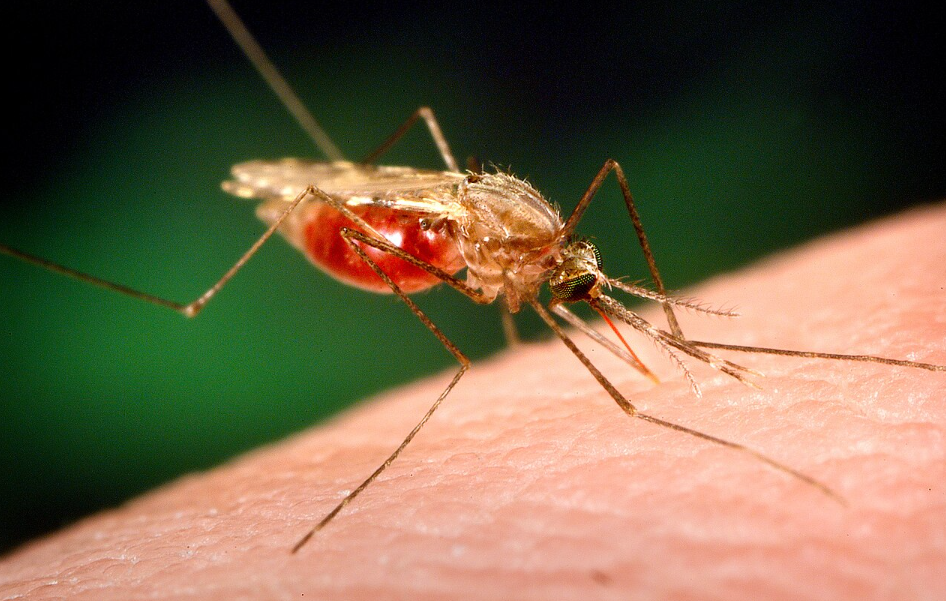
Malaria is a parasitic infection caused by six species of Plasmodium and is one of the leading causes of fever in returning travelers. The species that cause disease in humans are Plasmodium falciparum, P vivax, P ovale curtisi, P ovale wallikeri, P malariae, and P knowlesi. The protozoa are transmitted to humans through the bite of an infected Anopheles mosquito, which is most active during the early morning and evening hours. (see Image. Anopheles Species Mosquito). After transmission, Plasmodium sporozoites infect hepatocytes and multiply within the liver, where they mature into schizonts. The schizonts are then released from liver cells, where they infect red blood cells and continue to multiply. Clinical disease results from the release of Plasmodium merozoites during the rupture of infected erythrocytes (see Image. Plasmodium falciparum Ring Stage in Erythrocytes). P vivax and P ovale can persist in the liver as dormant hypnozoites, which may reactivate and cause infection weeks to years after the initial exposure.[1][2]
Malaria is endemic to sub-Saharan Africa, Central and South America, South and Southeast Asia, Oceania, and focal regions of the Middle East. In the United States, cases occur almost exclusively among travelers returning from these regions. Approximately 2000 cases were reported annually between 2007 and 2022. In the European Union, about 8000 cases were reported each year between 2018 and 2019. Travelers to endemic areas should therefore receive counseling on malaria risk in geographic areas, mosquito-bite prevention, and appropriate chemoprophylaxis (Centers for Disease Control and Prevention [CDC]; Data and Statistics on Malaria in the United States).
Function
Register For Free And Read The Full Article
 Search engine and full access to all medical articles
- 10 free questions in your specialty
- Free CME/CE Activities
- Free daily question in your email
- Save favorite articles to your dashboard
- Emails offering discounts
Learn more about a Subscription to StatPearls Point-of-Care
Function
General Considerations
A pretravel evaluation is recommended for travelers to malaria-endemic areas. The patient’s medical history should be reviewed, including psychiatric history, current medications, pregnancy status, and medication allergies. When selecting chemoprophylaxis, clinicians should consider the traveler’s comorbidities, medication allergies, itinerary, planned activities, duration of travel in endemic areas, and medication cost. Providers should also review the Plasmodium species present in the destination region, as well as local resistance patterns, seasonality, and transmission intensity.
Travelers should receive counseling on strategies to prevent mosquito bites. These include wearing clothing that minimizes exposed skin, applying DEET-containing insect repellent to exposed areas, staying in well-screened rooms, sleeping under permethrin-treated bed nets, and avoiding outdoor exposure during peak mosquito activity at dawn and dusk. When both sunscreen and insect repellent are used simultaneously, sunscreen should be applied first, followed by the insect repellent. Women should be screened for current or planned pregnancy because this affects prophylactic choices. Quantitative glucose-6-phosphate dehydrogenase (G6PD) testing is required before prescribing certain antimalarial medications, such as primaquine or tafenoquine.
Multiple resources are available for researching malaria-endemic areas and resistance patterns as part of the pretravel assessment. The World Health Organization (WHO) and the CDC offer free resources for healthcare providers and travelers with detailed information, including the WHO Malaria overview (WHO, Malaria) and the CDC Yellow Book (CDC, Malaria). Subscription-based resources are also available and provide additional detailed guidance that clinicians and travelers may refer to.
Chemoprophylaxis Choices
Malarial chemoprophylaxis functions by targeting different stages of the Plasmodium life cycle, including the liver schizont, blood schizont, and hypnozoite stages (see Image. Life Cycle of Plasmodium [Malaria Parasite]). Common chemoprophylaxis options include atovaquone-proguanil, doxycycline, mefloquine, and tafenoquine (for adults). For travel to geographic areas where chloroquine-sensitive malaria prevails, chloroquine or hydroxychloroquine remains an effective option.
Studies examining the efficacy of these medications have found them all to be equally effective in preventing malaria among short-term travelers, although atovaquone-proguanil and doxycycline are generally associated with fewer adverse effects. Among long-term travelers, adherence may be lower in younger individuals and those prescribed mefloquine.[CDC, Malaria and Choosing a Drug to Prevent Malaria.]
Atovaquone-proguanil: Atovaquone-proguanil targets both liver and blood schizonts and is effective against chloroquine-resistant P falciparum. Dosing begins 1 to 2 days before a traveler enters a malaria-endemic zone. One tablet is taken at the same time each day until 7 days after exiting the malarial zone. Although the medication is relatively expensive compared with other regimens, it has a longer half-life and may be more forgiving if a dose is missed.
The drug is generally well-tolerated. reported adverse effects include gastrointestinal upset, headaches, and transaminitis. Atovaquone-proguanil is not indicated for pregnant women, children with a body weight of 5 kg, or patients with creatinine clearance less than 30 mL/min. Limited evidence exists regarding the clinical impact of coadministering warfarin with atovaquone-proguanil; however, monitoring the international normalized ratio (INR) is prudent.[3]
Doxycycline: Doxycycline targets blood schizonts and is effective against chloroquine-resistant P falciparum. The medication should be started 1 to 2 days before travel to a malaria-endemic area, taken daily during travel, and continued for 4 weeks after leaving the area. Adverse effects include gastrointestinal upset, pill esophagitis, Candida vaginitis, and photosensitivity. Doxycycline is typically the least expensive of the medications. The short half-life of the drug, however, results in a possible lack of protection if a traveler misses even a single dose. As immunization against typhoid may be necessary before travel, the oral Ty21a vaccine should be completed at least 24 hours before the first dose of doxycycline is taken.
Mefloquine: Mefloquine targets blood schizonts and is effective against chloroquine-resistant P falciparum, although mefloquine resistance has emerged in parts of Southeast Asia. Travelers begin the medication at least 1 to 2 weeks before entering a malaria-endemic area and take it once weekly until 4 weeks after leaving the area. Neuropsychiatric adverse effects may include seizures and psychosis. The drug should be avoided in patients with a history of these conditions, as well as in those with recent or active depression, schizophrenia, or generalized anxiety disorder. Other reported adverse effects include vivid dreams, gastrointestinal upset, and headache. Many clinicians start the medication 1 to 2 months before travel to monitor for potential adverse effects. The US Food and Drug Administration (FDA) requires a boxed warning regarding the risk of serious neuropsychiatric adverse effects associated with mefloquine.
Chloroquine and hydroxychloroquine: Chloroquine targets blood schizonts. However, considerable protozoal resistance limits the use of these medications to travelers visiting areas with chloroquine-sensitive P falciparum, including the Caribbean, Central America west of the Panama Canal, Korea, and some parts of the Middle East. Travelers should begin the medication 1 week before entering a malaria-endemic area and take it once weekly until 4 weeks after leaving the area. These medications are generally well tolerated and may be used during pregnancy. Reported adverse effects include gastrointestinal upset, headache, dizziness, and exacerbation of preexisting psoriasis. Retinopathy, which has been associated with high-dose therapy for conditions such as rheumatoid arthritis or lupus, is unlikely with the lower weekly doses used for malaria prophylaxis.
Primaquine: Primaquine targets liver hypnozoites and gametocytes and may be used for primary prophylaxis in areas where P vivax predominates. Travelers should begin the medication 1 to 2 days before entering a malaria-endemic area and take it daily until 7 days after leaving the area. Primaquine is more commonly used as presumptive antirelapse therapy (PART) for travelers with prolonged exposure, where it is taken daily for the final 14 days after returning from areas endemic for P vivax or P ovale, often in combination with a blood-stage antimalarial agent such as atovaquone–proguanil, doxycycline, mefloquine, or chloroquine/hydroxychloroquine. An exception occurs when atovaquone–proguanil is used for primary prophylaxis. In that case, primaquine is administered during the final 7 days of the primary prophylaxis regimen and continued for an additional 7 days.
Travelers must be tested for glucose-6-phosphate dehydrogenase (G6PD) deficiency before starting primaquine because the medication can cause severe hemolytic anemia in G6PD-deficient individuals. Adverse effects are usually mild and most commonly include gastrointestinal upset.[4][5] [CDC; Malaria, Choosing a Drug to Prevent Malaria and Treatment of Uncomplicated Malaria]
Tafenoquine: Tafenoquine is active against both hepatic and erythrocytic forms of Plasmodium species. The drug also targets pre-erythrocytic forms (hypnozoites), which helps prevent relapses of P vivax. The medication is approved for malaria prophylaxis in individuals aged 18 years and older and for the radical cure of P vivax (elimination of dormant hypnozoites in the liver) in those aged 16 and older.
Prophylactic dosing is taking tafenoquine daily for 3 days before travel to a malaria-endemic area, then once-weekly dosing during travel, and a single dose 7 days after leaving the endemic area. Similar to primaquine, tafenoquine can cause life-threatening hemolytic anemia in patients with G6PD deficiency, making testing essential before initiating the regimen. Psychiatric adverse effects have been reported, and the medication should be discontinued if psychotic symptoms occur. Additional adverse effects include gastrointestinal upset, headache, asymptomatic elevations in methemoglobin levels, and vortex keratopathy of the cornea with prolonged use. Because tafenoquine has a long half-life of approximately 17 days, delayed adverse reactions may occur.[4] [CDC, Travelers' Health—Tafenoquine Approved for Malaria Prophylaxis and Treatment]
Fewer than 50% of travelers who contract malaria seek pretravel consultation, and nearly all US residents who acquire travel-associated malaria do not adhere to CDC-recommended chemoprophylaxis. Individuals at particularly high risk include last-minute travelers and those visiting friends and relatives abroad. These travelers may underestimate their risk of infection or the severity of malaria. Some may also mistakenly believe they retain lifelong immunity to malaria after emigrating from endemic areas.[6][7]
Vaccines and Monoclonal Antibodies
The identification and development of durable immunity against malaria have long been subjects of research.[8] Vaccine development has been challenging because of the complex life cycle of Plasmodium species and their antigenic variability. In 2021 and 2023, respectively, the WHO recommended the RTS,S/AS01 and R21 vaccines for malaria prevention in children living in malaria-endemic areas. These vaccines are administered in a 4-dose series beginning at approximately 5 months of age.[WHO, WHO recommends R21/Matrix-M vaccine for malaria prevention in updated advice on immunization]
During clinical trials, these vaccines reduced malaria cases by more than 50% and by up to 75% when administered seasonally in areas with highly seasonal transmission.[9] Vaccine effectiveness may decline over time, particularly in highly endemic regions.[10] The vaccines are currently being introduced in 24 African countries, with the goal of reaching 10 million young children by 2025.[WHO, Malaria vaccines (RTS,S and R21]. The FDA does not approve these vaccines for routine use in adult travelers. Current travel health guidance continues to emphasize chemoprophylaxis and mosquito-bite prevention rather than vaccination for short-term travelers.
Subcutaneously administered monoclonal antibodies with extended half-lives have demonstrated efficacy against P falciparum infection. Both L9LS and CIS43LS monoclonal antibodies target antigens of the P falciparum circumsporozoite protein. These agents have shown high levels of protection for several months in human challenge studies and in trials involving children and adults living in endemic regions.[11][12][13] Further development is ongoing, and these monoclonal antibodies may become commercially available in the future.
Issues of Concern
Specific Patient Populations
Pregnant travelers: They should generally be advised to avoid travel to malaria-endemic areas until after delivery because malaria infection increases the risk of prematurity, spontaneous abortion, and stillbirth. Malaria can also be more severe in pregnant women. In situations where travel cannot be deferred, mefloquine, chloroquine, and hydroxychloroquine may be used during pregnancy when usual contraindications and regional resistance patterns are considered.
Doxycycline is contraindicated during pregnancy because of the risk of fetal dental discoloration and inhibition of bone growth. Atovaquone–proguanil has not been adequately studied in pregnant women and is generally avoided in this population. Primaquine and tafenoquine should not be used during pregnancy because of the risk of hemolytic anemia in a fetus with undiagnosed G6PD deficiency.
Breastfeeding: Antimalarial medications are not excreted in breast milk in amounts sufficient to provide adequate chemoprophylaxis to infants. As mefloquine, chloroquine, and hydroxychloroquine are considered safe for infants, they are reasonable prophylaxis options for breastfeeding mothers when otherwise appropriate. Limited data exist for doxycycline, and it is generally not recommended for use in breastfeeding mothers because of potential risks to bone growth and dental development in infants. Safety data for atovaquone–proguanil during breastfeeding are also limited, and it is not recommended for breastfeeding infants with a body weight of less than 5 kg. Before prescribing primaquine, both the mother and the infant should be tested for G6PD deficiency.
Children: Atovaquone-proguanil may be used for children with a body weight of more than 5 kg. Mefloquine, chloroquine, and primaquine can also be prescribed for children, taking into account regional resistance patterns and the usual contraindications. Doxycycline should not be used in children aged 8 or younger due to the risk of permanent dental discoloration, and tafenoquine is not approved for individuals aged 18 or younger.
Pediatric dosing should be weight-based and should not exceed the recommended adult dose. Antimalarial medications may be better tolerated if mixed with a sweet food or drink to mask their bitter taste. The medication should also be taken with food to reduce the risk of vomiting or other gastrointestinal upset. Overdose of antimalarial medications, particularly chloroquine, can be fatal in children. Child-resistant containers and standard medication safety precautions are therefore essential.
Malaria prevention in older travelers: Older travelers are more likely to experience morbidity and mortality from malaria than younger individuals. A systematic review found that travelers aged 60 or older were less likely to adhere to mosquito-bite prevention measures, although adherence to chemoprophylaxis appeared to be better in this group. Atovaquone–proguanil may be a preferred option for many older travelers. However, some evidence suggests that older adults experience lower rates of mefloquine-associated neuropsychiatric adverse effects than younger adults. When selecting a chemoprophylaxis regimen, clinicians should carefully consider potential drug–drug interactions and age-related reductions in creatinine clearance.[14]
Clinical Significance
As most malaria cases in countries such as the United States occur in travelers visiting friends and relatives, clinicians should remain alert when evaluating patients planning travel to malaria-endemic regions. These patients should receive counseling on mosquito-bite prevention and be prescribed appropriate chemoprophylaxis. Initiating the antimalarial prophylaxis before departure helps ensure that the medication is tolerated and allows adequate drug levels to be achieved before arrival in the endemic area. A 2007 systematic review found that atovaquone–proguanil had a 96% efficacy against P falciparum.[3] The effectiveness of the drug largely depends on patient adherence and tolerance of the selected medication. The development of newer agents that reduce adverse effects, such as gastrointestinal upset, psychiatric symptoms, and seizures, may improve the tolerability of malaria prophylactic regimens.
Other Issues
Obtaining Medications Abroad
Although many medications used for malaria prophylaxis may be available abroad, travelers should be aware that the quality of these products may be uncertain. Some are also sold in combination with other medications that may not be appropriate. In addition, chemoprophylaxis should typically be started before travel. Travelers should therefore be discouraged from obtaining malaria prophylaxis while abroad because of concerns about unknown quality, inconsistent quantities of active ingredients, and the potential presence of contaminants.
Changing Prophylaxis Regimens
If a patient cannot tolerate the adverse effects of an antimalarial medication, clinicians should consider the stage of the Plasmodium life cycle targeted by each drug to ensure appropriate coverage when selecting an alternative regimen. References such as the CDC Yellow Book can help guide these decisions by considering the patient’s current medications, the timing of departure from the malaria-endemic area, and other relevant factors.
Enhancing Healthcare Team Outcomes
Healthcare professionals, including primary care clinicians and advanced practice nurses, should be familiar with malaria prophylaxis. The interprofessional healthcare team should provide accessible, culturally appropriate guidance for travelers, particularly those visiting friends and relatives in malaria-endemic areas. Clinicians should assess travel-related risks and encourage both mosquito-bite prevention and the use of chemoprophylaxis when indicated. Using a health belief model to identify potential barriers to chemoprophylaxis adherence and to explore acceptable alternatives may improve counseling outcomes.
In addition to prescribing prophylaxis, clinicians must educate travelers on strategies to avoid mosquito bites. Nurses should ask patients about recent or planned travel to endemic regions and initiate appropriate steps for malaria prevention in collaboration with the clinician. Pharmacists play an important role by reviewing medication selection, verifying dosing, and counseling patients about potential adverse effects and drug–drug interactions.
Clinicians should also use these encounters to assess risk for the entire traveling party and encourage all travelers to seek a pretravel consultation. Preventive education should emphasize practical measures such as wearing protective clothing, applying a DEET-containing insect repellent, using mosquito nets while sleeping, and limiting outdoor exposure after dusk during peak mosquito activity. Effective malaria prevention requires coordinated efforts across the interprofessional healthcare team.
Nursing, Allied Health, and Interprofessional Team Interventions
Missed Dosing of Chemoprophylaxis
CDC guidance for missed doses varies by medication. In general, travelers who miss a dose of a once-weekly prophylactic medication should take the dose as soon as they remember and then resume the regular weekly schedule. If the dose is missed by more than 2 days, drug levels may fall below protective levels. The missed dose should be taken as soon as possible, followed by the next dose 7 days later, then weekly thereafter.
For daily dosing regimens, the medication should be taken at the same time each day. If a dose is missed by 1 to 2 days, protective drug levels may be reduced. The missed dose should be taken as soon as it is remembered, and subsequent doses should continue daily at the usual time.
Nursing, Allied Health, and Interprofessional Team Monitoring
Clinicians should consider monitoring the INR in patients taking atovaquone–proguanil with warfarin. Creatinine clearance should be assessed before prescribing doxycycline, and patients should be screened for G6PD deficiency before initiating primaquine or tafenoquine for malaria prophylaxis.
Media
(Click Image to Enlarge)
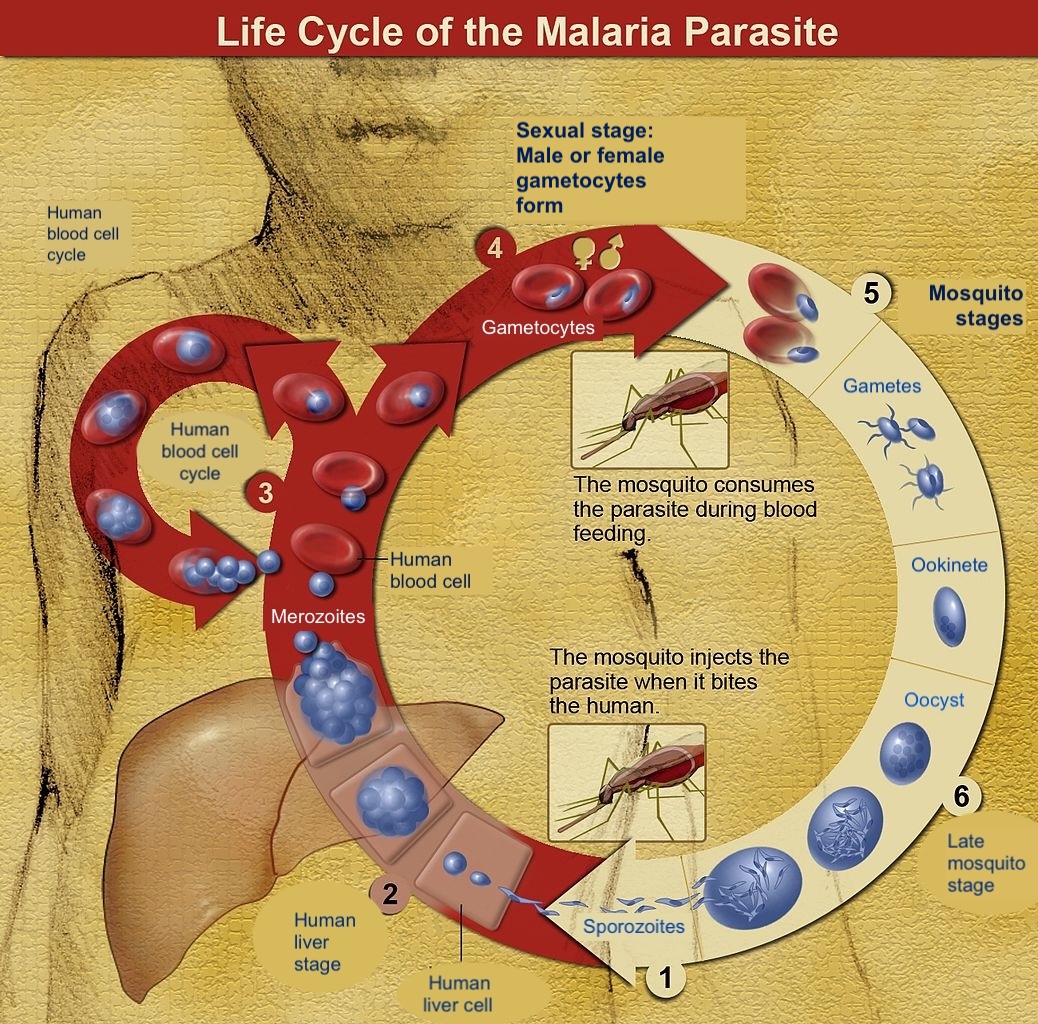
Plasmodium Life Cycle. Illustration of the Plasmodium life cycle.
Public Health Image Library, Public Domain, Centers for Disease Control and Prevention
(Click Image to Enlarge)

(Click Image to Enlarge)
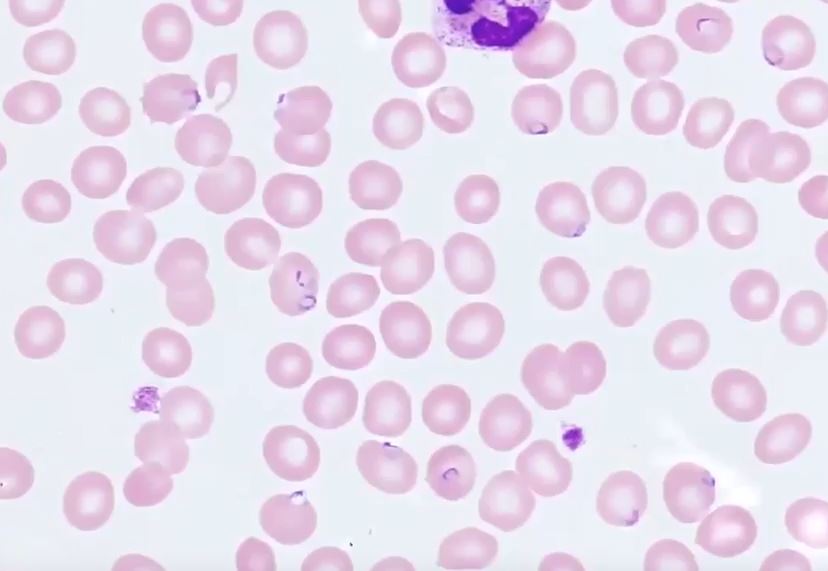
Plasmodium falciparum Ring Stage in Erythrocytes. Multiple ring-shaped trophozoites are visible within red blood cells, a finding characteristic of Plasmodium falciparum infection.
Cade Arries, MD, Public Domain, via Wikimedia Commons
References
Daily JP, Minuti A, Khan N. Diagnosis, Treatment, and Prevention of Malaria in the US: A Review. JAMA. 2022 Aug 2:328(5):460-471. doi: 10.1001/jama.2022.12366. Epub [PubMed PMID: 35916842]
Poespoprodjo JR, Douglas NM, Ansong D, Kho S, Anstey NM. Malaria. Lancet (London, England). 2023 Dec 16:402(10419):2328-2345. doi: 10.1016/S0140-6736(23)01249-7. Epub 2023 Nov 2 [PubMed PMID: 37924827]
Nakato H, Vivancos R, Hunter PR. A systematic review and meta-analysis of the effectiveness and safety of atovaquone proguanil (Malarone) for chemoprophylaxis against malaria. The Journal of antimicrobial chemotherapy. 2007 Nov:60(5):929-36 [PubMed PMID: 17848375]
Level 1 (high-level) evidenceBerman JD. Approval of Tafenoquine for Malaria Chemoprophylaxis. The American journal of tropical medicine and hygiene. 2019 Jun:100(6):1301-1304. doi: 10.4269/ajtmh.19-0001. Epub [PubMed PMID: 30887947]
Hill DR, Baird JK, Parise ME, Lewis LS, Ryan ET, Magill AJ. Primaquine: report from CDC expert meeting on malaria chemoprophylaxis I. The American journal of tropical medicine and hygiene. 2006 Sep:75(3):402-15 [PubMed PMID: 16968913]
Bacaner N, Stauffer B, Boulware DR, Walker PF, Keystone JS. Travel medicine considerations for North American immigrants visiting friends and relatives. JAMA. 2004 Jun 16:291(23):2856-64 [PubMed PMID: 15199037]
Leder K, Black J, O'Brien D, Greenwood Z, Kain KC, Schwartz E, Brown G, Torresi J. Malaria in travelers: a review of the GeoSentinel surveillance network. Clinical infectious diseases : an official publication of the Infectious Diseases Society of America. 2004 Oct 15:39(8):1104-12 [PubMed PMID: 15486832]
Colstrup E, Nakajima R, Krol JMM, Lamers OAC, de Assis RR, Jain A, Jasinskas A, Iliopoulou E, de Bes-Roeleveld HM, Franke-Fayard BMD, Roestenberg M, Felgner PL, Murugan R. Correlative humoral and cellular immunity to genetically attenuated malaria parasites in humans. iScience. 2025 Jun 20:28(6):112589. doi: 10.1016/j.isci.2025.112589. Epub 2025 May 5 [PubMed PMID: 40487438]
Datoo MS, Dicko A, Tinto H, Ouédraogo JB, Hamaluba M, Olotu A, Beaumont E, Ramos Lopez F, Natama HM, Weston S, Chemba M, Compaore YD, Issiaka D, Salou D, Some AM, Omenda S, Lawrie A, Bejon P, Rao H, Chandramohan D, Roberts R, Bharati S, Stockdale L, Gairola S, Greenwood BM, Ewer KJ, Bradley J, Kulkarni PS, Shaligram U, Hill AVS, R21/Matrix-M Phase 3 Trial Group. Safety and efficacy of malaria vaccine candidate R21/Matrix-M in African children: a multicentre, double-blind, randomised, phase 3 trial. Lancet (London, England). 2024 Feb 10:403(10426):533-544. doi: 10.1016/S0140-6736(23)02511-4. Epub 2024 Feb 1 [PubMed PMID: 38310910]
Level 1 (high-level) evidenceOlotu A, Fegan G, Wambua J, Nyangweso G, Leach A, Lievens M, Kaslow DC, Njuguna P, Marsh K, Bejon P. Seven-Year Efficacy of RTS,S/AS01 Malaria Vaccine among Young African Children. The New England journal of medicine. 2016 Jun 30:374(26):2519-29. doi: 10.1056/NEJMoa1515257. Epub [PubMed PMID: 27355532]
Wu RL, Idris AH, Berkowitz NM, Happe M, Gaudinski MR, Buettner C, Strom L, Awan SF, Holman LA, Mendoza F, Gordon IJ, Hu Z, Campos Chagas A, Wang LT, Da Silva Pereira L, Francica JR, Kisalu NK, Flynn BJ, Shi W, Kong WP, O'Connell S, Plummer SH, Beck A, McDermott A, Narpala SR, Serebryannyy L, Castro M, Silva R, Imam M, Pittman I, Hickman SP, McDougal AJ, Lukoskie AE, Murphy JR, Gall JG, Carlton K, Morgan P, Seo E, Stein JA, Vazquez S, Telscher S, Capparelli EV, Coates EE, Mascola JR, Ledgerwood JE, Dropulic LK, Seder RA, VRC 614 Study Team. Low-Dose Subcutaneous or Intravenous Monoclonal Antibody to Prevent Malaria. The New England journal of medicine. 2022 Aug 4:387(5):397-407. doi: 10.1056/NEJMoa2203067. Epub [PubMed PMID: 35921449]
Kayentao K, Ongoiba A, Preston AC, Healy SA, Hu Z, Skinner J, Doumbo S, Wang J, Cisse H, Doumtabe D, Traore A, Traore H, Djiguiba A, Li S, Peterson ME, Telscher S, Idris AH, Adams WC, McDermott AB, Narpala S, Lin BC, Serebryannyy L, Hickman SP, McDougal AJ, Vazquez S, Reiber M, Stein JA, Gall JG, Carlton K, Schwabl P, Traore S, Keita M, Zéguimé A, Ouattara A, Doucoure M, Dolo A, Murphy SC, Neafsey DE, Portugal S, Djimdé A, Traore B, Seder RA, Crompton PD, Mali Malaria mAb Trial Team. Subcutaneous Administration of a Monoclonal Antibody to Prevent Malaria. The New England journal of medicine. 2024 May 2:390(17):1549-1559. doi: 10.1056/NEJMoa2312775. Epub 2024 Apr 26 [PubMed PMID: 38669354]
Kayentao K, Ongoiba A, Preston AC, Healy SA, Doumbo S, Doumtabe D, Traore A, Traore H, Djiguiba A, Li S, Peterson ME, Telscher S, Idris AH, Kisalu NK, Carlton K, Serebryannyy L, Narpala S, McDermott AB, Gaudinski M, Traore S, Cisse H, Keita M, Skinner J, Hu Z, Zéguimé A, Ouattara A, Doucoure M, Dolo A, Djimdé A, Traore B, Seder RA, Crompton PD, Mali Malaria mAb Trial Team. Safety and Efficacy of a Monoclonal Antibody against Malaria in Mali. The New England journal of medicine. 2022 Nov 17:387(20):1833-1842. doi: 10.1056/NEJMoa2206966. Epub 2022 Oct 31 [PubMed PMID: 36317783]
Del Prete V, Mateo-Urdiales A, Bueno-Cavanillas A, Ferrara P. Malaria prevention in the older traveller: a systematic review. Journal of travel medicine. 2019 Oct 14:26(7):. pii: taz067. doi: 10.1093/jtm/taz067. Epub [PubMed PMID: 31509199]
Level 1 (high-level) evidence