 Tools
Tools
 Diffuse Toxic Goiter
Introduction
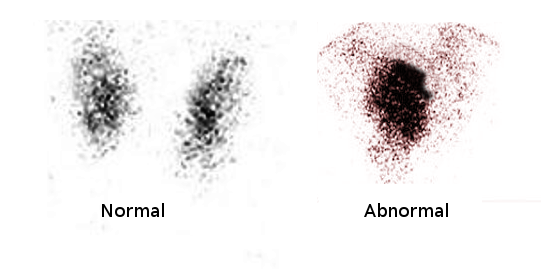
Goiter refers to enlargement of the thyroid gland and may arise from multiple etiologies, with dietary iodine deficiency representing the most common cause worldwide. In the United States, Graves disease and Hashimoto disease predominate in clinical practice. Goiters may be classified by several defining features, including morphology (nodular or diffuse patterns), functional status (hyperthyroid, hypothyroid, or euthyroid states), and the presence or absence of malignancy. A diffuse toxic goiter, by definition, represents a diffusely hyperplastic thyroid gland associated with overproduction of thyroid hormones, resulting in sustained thyrotoxicosis and progressive glandular enlargement (see Image. Toxic Nodular Goiter).
Etiology
Register For Free And Read The Full Article
 Search engine and full access to all medical articles
- 10 free questions in your specialty
- Free CME/CE Activities
- Free daily question in your email
- Save favorite articles to your dashboard
- Emails offering discounts
Learn more about a Subscription to StatPearls Point-of-Care
Etiology
The following are potential and commonly seen causes of goiter development:
- Iodine deficiency [1]
- Autoimmune disorders [2]
- Smoking
- Hereditary pattern [3]
- Medications that include lithium, iodides, and interferon-alpha [4]
- Radiation therapy [5]
- Inflammation and infections, with most recently reported cases after Covid-19 disease as well as vaccination againt Covid virus [6][7]
Epidemiology
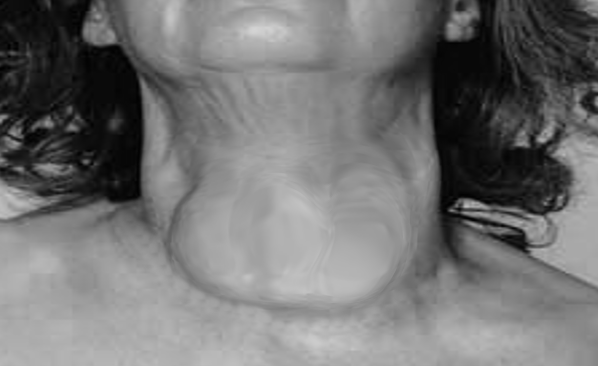
Graves disease represents the most common cause of diffuse toxic goiter and remains the leading cause of hyperthyroidism in the United States and worldwide, affecting 1 in 200 individuals. The condition most frequently affects patients between 30 and 50 years of age, although presentation may occur across all age groups. A strong female predominance is observed, with occurrence rates 7 to 10 times higher in females than in males (see Image. Goiter in a Woman). Clinical observations also demonstrate a marked increase in familial incidence, supporting a significant genetic predisposition.
Pathophysiology
Diffuse toxic goiter is a diffusely enlarged vascular gland with a rubber-like consistency. Microscopically, the follicular cells are hypertrophic and hyperplastic, with little colloid present. Lymphocytes and plasma cells infiltrate into the gland and can ultimately aggregate into lymphoid follicles. Not all cases of diffuse toxic goiters are Graves disease, and there may be various nonautoimmune causative processes, although the majority of cases are autoimmune. In Graves disease, antibodies are directed against the thyroid-stimulating hormone receptor, which is expressed on thyroid follicular cells. Chronic stimulation of these receptors leads to increased production of T3 and T4, causing thyroid gland enlargement and eventually a goiter.[8]
Histopathology
This disease demonstrates distinct histological characteristics that define its pathologic appearance. The thyroid gland shows diffuse, non-nodular enlargement accompanied by a smooth capsule and increased vascularity. Microscopic examination reveals hyperplasia of both follicular and papillary cells, along with lymphocytic infiltration within the stromal tissue of the thyroid gland.
Additionally, follicular cell enlargement frequently appears and, in extreme cases, nuclear enlargement may mimic features of papillary thyroid carcinoma. In Graves disease, however, the nuclei typically maintain a rounded configuration with minimal clearing. These overlapping histologic features have generated ongoing controversy regarding a potential association between Graves disease and papillary thyroid carcinoma and whether the coexistence of the 2 conditions alters prognosis. Systematic reviews of multiple studies indicate that papillary carcinoma identified after surgical removal of the thyroid gland carries an excellent prognosis, whereas tumors detected in patients with active Graves disease show outcomes largely determined by local tumor characteristics, including size, extent, margins, and functionality.[9][10]
History and Physical
History
Patients may report a history of 1 or more manifestations associated with a hyperthyroid state. Common symptoms include weight loss, heat intolerance accompanied by polydipsia and excessive sweating, tremors, nervousness, anxiety, fatigue, palpitations, shortness of breath, and frequent defecation with loose stools or diarrhea. Additional complaints may include nausea and vomiting. Local compressive or mass-related symptoms often involve visible neck swelling, a sensation of a lump in the neck, globus sensation, difficulty swallowing, or orthopnea.
Patients with Graves disease may exhibit additional characteristic features, including ophthalmopathy, referred to as Graves orbitopathy, which occurs in approximately 25% of patients and presents with proptosis, diplopia, periorbital edema, and excessive lacrimation. Thyroid dermopathy, a rare manifestation observed in approximately 4% of patients and typically concurrent with orbitopathy, presents as slightly thickened, pigmented skin, most commonly over the pretibial region. Reproductive system abnormalities may also occur, most frequently manifesting as irregular menstruation.[11]
Physical Examination
The most commonly described physical exam findings associated with a patient with diffuse toxic goiter include:
- Constitutional: weight loss
- Head, eyes, ears, neck: neck swelling with occasional audible bruit, proptosis, lid lag, periorbital edema, exophthalmos, stare
- Cardiovascular system: tachycardia, irregular heartbeat, systolic hypertension
- Neuromuscular: tremor of extremities, hyperreflexia, hyperactivity, muscle weakness
- Respiratory system: shortness of breath or tachypnea
- Skin and extremities: moist and warm skin, sweaty hands, pretibial myxedema
Evaluation
The primary evaluation of toxic diffuse goiter involves obtaining a complete thyroid profile, including serum T3, T4, and TSH levels. Serum TSH serves as the most reliable screening test for detecting thyroid hormone excess or deficiency.[12] In patients with diffuse toxic goiter, these tests typically reveal low or marginally low-normal TSH levels, accompanied by elevated peripheral serum thyroid hormone levels.
Evaluation of the underlying cause of thyrotoxicosis may vary depending on population characteristics, socioeconomic factors, and cultural considerations. Clinicians may use radioactive iodide uptake or a combination of thyroid ultrasound with TSH-receptor antibody (TRAb) testing. Diffuse high uptake on radioactive iodine studies indicates Graves disease, as does the presence of an enlarged thyroid gland with positive TRAb results.[11]
Treatment / Management
Treatment of diffuse toxic goiter involves several modalities, including antithyroid drugs, radioactive iodine therapy, and surgical intervention, with selection based on disease severity, patient characteristics, and risk factors.
Antithyroid Drugs
Available antithyroid medications include propylthiouracil, methimazole, and carbimazole. The American Thyroid Association and American Association of Clinical Endocrinology recommend methimazole as the preferred therapy for Graves disease, except in patients with adverse reactions or women in the first trimester of pregnancy. Methimazole offers advantages over propylthiouracil, including higher efficacy, longer half-life and duration of action, and the convenience of once-daily dosing.
Two regimens guide antithyroid drug administration. The titration method gradually reduces the dose to maintain a euthyroid state, while the block-and-replace method combines high-dose antithyroid drugs with thyroxine replacement to achieve and sustain euthyroidism.[13] Recurrence represents a significant limitation of antithyroid drug therapy, particularly within the first year after discontinuation. Studies report a 50% to 55% recurrence risk, with poor prognostic indicators including severe hyperthyroidism, large goiter, elevated T3:T4 ratios, persistently suppressed TSH, and high baseline TRAb levels.[14][15][16] Rare but serious adverse effects include agranulocytosis, hepatotoxicity, and vasculitis. Coadministration of probiotics with antithyroid drug therapy has shown promise in reducing recurrence and flare-ups.[17][18][19](A1)
Radioactive Iodine Therapy
Radioactive iodine therapy (RAI) represents the most common treatment for Graves disease in the United States and demonstrates a high safety and efficacy profile. Absolute contraindications include pregnancy, breastfeeding, and severe uncontrolled thyrotoxicosis, while active moderate to severe Graves orbitopathy constitutes a relative contraindication.[20] Administration may occur via liquid or capsule, and fixed-dose therapy achieves outcomes comparable to calculated-dose therapy based on gland volume and iodine uptake.
Effective RAI therapy requires discontinuation of all iodine-containing medications and adherence to an iodine-restricted diet. Antithyroid drug therapy should be paused, preferably 1 week before RAI, and may resume a few days after administration if needed. Potential adverse effects include hypothyroidism, transient radiation-induced hyperthyroidism, and, rarely, worsening of thyroid-associated ophthalmopathy (TAO). Hypothyroidism is monitored during follow-up, and prednisone may prevent progression of ocular disease. Patients require counseling regarding lifelong monitoring for disease recurrence or hypothyroidism, with prompt treatment offered if abnormalities develop.[15](A1)
Surgery
Thyroidectomy offers the most effective permanent therapy for diffuse toxic goiter, with total thyroidectomy achieving higher success than subtotal thyroidectomy while maintaining similar risk profiles. Surgical intervention serves as a last-line treatment due to risks associated with general anesthesia, recurrent laryngeal nerve injury, vascular complications, and hypothyroidism. Surgery is preferred for patients who cannot tolerate or experience significant adverse effects from antithyroid drugs or RAI therapy, or for those with compressive symptoms resulting from a large goiter.[21](B3)
Differential Diagnosis
Differential diagnoses with similar clinical features of diffuse toxic goiter that should also be considered include:
- Thyrotoxicosis factitia with overprescription or consumption of thyroid hormones
- Subacute or acute thyroiditis
- Multinodular goiter
- TSH-secreting pituitary adenoma
- Iatrogenic iodine supplementation
Prognosis
Patients with diffuse toxic goiter, primarily due to Graves disease, are expected to become hypothyroid during the natural course of their disease regardless of treatment. Prolonged thyrotoxicosis may cause ventricular thickening and, therefore, an increased risk of cardiac morbidity and mortality. Treatment with RAI is conducted with the aim of permanent hypothyroidism, thus making the patient dependent on lifelong thyroid hormone supplementation. Antithyroid drugs have an average remission rate of 50% but an excellent prognosis after 4 years, devoid of relapse.[22]
Complications
The complications that can manifest with diffuse toxic goiter include:
- Hyperthyroidism, or thyroid storm, due to prolonged untreated excess of thyroid hormone
- Cardiac arrhythmias and congestive heart failure
- Rare liver pathology, including fibrosis [23]
- Dermopathy, mostly associated with Graves disease
- Graves ophthalmopathy
Consultations
Patients with diffuse goiters should undergo evaluation by endocrinologists to facilitate detailed testing and accurate diagnosis. Coordinated teamwork among primary care physicians, radiologists, surgeons, and endocrine specialists enhances patient outcomes and ensures comprehensive management. Pharmacists play a key role by counseling patients on potential adverse effects of prescribed medications, enabling patients to recognize symptoms and promptly report concerns to their healthcare providers.
The treatment plan should be discussed with patients in advance, outlining the expected benefits and potential risks of each therapeutic option. Ongoing communication among the healthcare team is essential to prepare patients for subsequent steps, reinforce understanding of the management plan, and promote adherence. Close collaboration across disciplines supports patient-centered care and optimizes clinical outcomes.
Deterrence and Patient Education
Effective deterrence and patient education play a critical role in the management of diffuse toxic goiter. Educating patients about early recognition of hypermetabolic symptoms, such as heat intolerance, excessive sweating, weight loss, palpitations, tremors, and emotional lability, allows for timely evaluation and treatment, reducing the risk of severe complications like thyroid storm or cardiac arrhythmias. Patients should also be instructed to monitor for visible neck swelling and changes in neck contour, which may signal progression of the goiter. Older adult patients require special attention, as they may present atypically with apathy or atrial fibrillation rather than classic adrenergic symptoms, necessitating vigilance for misdiagnosis with depression, malignancy, or cardiac conditions.
Patient education should include a thorough discussion of treatment options, including antithyroid medications, radioactive iodine therapy, and surgical interventions, emphasizing the benefits, risks, and potential adverse effects of each approach. Pharmacists and clinicians should guide patients on medication adherence and monitoring for adverse reactions, while the interprofessional care team should coordinate follow-up and reinforce lifestyle modifications that support thyroid health. Clear communication empowers patients to recognize early warning signs, adhere to therapy, and engage proactively in their care, ultimately improving outcomes and reducing recurrence or complications.
Pearls and Other Issues
Although many cases of diffuse goiter remain asymptomatic, patients who notice an enlarged thyroid gland should be referred for specialty evaluation to assess gland function, while the anatomy is examined in more detail. Blood tests focusing on thyroid hormone levels and a neck ultrasound are the easiest starting points, and depending on the findings, further testing can be pursued, as explained earlier.
Enhancing Healthcare Team Outcomes
Diffuse toxic goiter, most commonly caused by Graves disease, represents a hyperfunctioning enlargement of the thyroid gland that produces excessive thyroid hormones. Patients often present with hypermetabolic symptoms, including weight loss, heat intolerance, tremors, palpitations, and emotional lability, alongside neck swelling. Older adult patients may exhibit atypical presentations, such as apathy or atrial fibrillation, which can mimic depression, malignancy, or cardiac disease. Diagnosis relies on thyroid function testing, TSH-receptor antibody assessment, and imaging when indicated. Management includes antithyroid medications, radioactive iodine therapy, and surgical intervention, tailored to disease severity, patient comorbidities, and risk factors. Lifelong follow-up is critical to monitor for recurrence, hypothyroidism, or ophthalmopathy.
Effective care for patients with diffuse toxic goiter requires coordinated efforts among physicians, general practitioners, advanced practitioners, nurses, pharmacists, and other health professionals. Clinicians must demonstrate expertise in evaluation, diagnosis, and evidence-based management, while pharmacists counsel patients on medication use and potential adverse effects. Nurses and advanced practitioners play a pivotal role in monitoring symptoms, supporting adherence, and providing patient education. Interprofessional communication ensures timely decision-making, appropriate follow-up, and patient-centered care. Coordination across specialties, including endocrinology, radiology, and surgery, enhances outcomes, promotes safety, reduces complications, and fosters a cohesive team approach that empowers patients and optimizes clinical results.
Media
(Click Image to Enlarge)
Toxic Nodular Goiter
Contributed by S Bhimji, MD
(Click Image to Enlarge)
Goiter in a Woman. Clinical photograph showing anterior neck enlargement consistent with thyroid gland hypertrophy.
Contributed by S Bhimji, MD
References
Zimmermann MB, Boelaert K. Iodine deficiency and thyroid disorders. The lancet. Diabetes & endocrinology. 2015 Apr:3(4):286-95. doi: 10.1016/S2213-8587(14)70225-6. Epub 2015 Jan 13 [PubMed PMID: 25591468]
Swain M, Swain T, Mohanty BK. Autoimmune thyroid disorders-An update. Indian journal of clinical biochemistry : IJCB. 2005 Jan:20(1):9-17. doi: 10.1007/BF02893034. Epub [PubMed PMID: 23105486]
Knobel M. Etiopathology, clinical features, and treatment of diffuse and multinodular nontoxic goiters. Journal of endocrinological investigation. 2016 Apr:39(4):357-73. doi: 10.1007/s40618-015-0391-7. Epub 2015 Sep 21 [PubMed PMID: 26392367]
Dong BJ. How medications affect thyroid function. The Western journal of medicine. 2000 Feb:172(2):102-6 [PubMed PMID: 10693372]
Jereczek-Fossa BA, Alterio D, Jassem J, Gibelli B, Tradati N, Orecchia R. Radiotherapy-induced thyroid disorders. Cancer treatment reviews. 2004 Jun:30(4):369-84 [PubMed PMID: 15145511]
Lanzolla G, Marcocci C, Marinò M. Graves' disease and Graves' orbitopathy following COVID-19. Journal of endocrinological investigation. 2021 Sep:44(9):2011-2012. doi: 10.1007/s40618-021-01576-7. Epub 2021 May 8 [PubMed PMID: 33964007]
Lui DTW, Lee KK, Lee CH, Lee ACH, Hung IFN, Tan KCB. Development of Graves' Disease After SARS-CoV-2 mRNA Vaccination: A Case Report and Literature Review. Frontiers in public health. 2021:9():778964. doi: 10.3389/fpubh.2021.778964. Epub 2021 Nov 23 [PubMed PMID: 34888290]
Level 3 (low-level) evidencePrabhakar BS, Bahn RS, Smith TJ. Current perspective on the pathogenesis of Graves' disease and ophthalmopathy. Endocrine reviews. 2003 Dec:24(6):802-35 [PubMed PMID: 14671007]
Level 3 (low-level) evidenceLiVolsi VA, Baloch ZW. The Pathology of Hyperthyroidism. Frontiers in endocrinology. 2018:9():737. doi: 10.3389/fendo.2018.00737. Epub 2018 Dec 3 [PubMed PMID: 30559722]
Oertli D, Harder F, Oberholzer M, Staub JJ. [Hyperthyroidism and thyroid carcinoma--coincidence or association?]. Schweizerische medizinische Wochenschrift. 1998 Nov 28:128(48):1910-4 [PubMed PMID: 9879620]
De Leo S, Lee SY, Braverman LE. Hyperthyroidism. Lancet (London, England). 2016 Aug 27:388(10047):906-918. doi: 10.1016/S0140-6736(16)00278-6. Epub 2016 Mar 30 [PubMed PMID: 27038492]
Baskin HJ, Cobin RH, Duick DS, Gharib H, Guttler RB, Kaplan MM, Segal RL, American Association of Clinical Endocrinologists. American Association of Clinical Endocrinologists medical guidelines for clinical practice for the evaluation and treatment of hyperthyroidism and hypothyroidism. Endocrine practice : official journal of the American College of Endocrinology and the American Association of Clinical Endocrinologists. 2002 Nov-Dec:8(6):457-69 [PubMed PMID: 15260011]
Level 1 (high-level) evidenceAllannic H, Fauchet R, Orgiazzi J, Madec AM, Genetet B, Lorcy Y, Le Guerrier AM, Delambre C, Derennes V. Antithyroid drugs and Graves' disease: a prospective randomized evaluation of the efficacy of treatment duration. The Journal of clinical endocrinology and metabolism. 1990 Mar:70(3):675-9 [PubMed PMID: 1689737]
Level 1 (high-level) evidenceChung JH. Antithyroid Drug Treatment in Graves' Disease. Endocrinology and metabolism (Seoul, Korea). 2021 Jun:36(3):491-499. doi: 10.3803/EnM.2021.1070. Epub 2021 Jun 16 [PubMed PMID: 34130446]
Abraham P, Avenell A, McGeoch SC, Clark LF, Bevan JS. Antithyroid drug regimen for treating Graves' hyperthyroidism. The Cochrane database of systematic reviews. 2010 Jan 20:2010(1):CD003420. doi: 10.1002/14651858.CD003420.pub4. Epub 2010 Jan 20 [PubMed PMID: 20091544]
Level 1 (high-level) evidenceAzizi F, Abdi H, Amouzegar A, Habibi Moeini AS. Long-term thionamide antithyroid treatment of Graves' disease. Best practice & research. Clinical endocrinology & metabolism. 2023 Mar:37(2):101631. doi: 10.1016/j.beem.2022.101631. Epub 2022 Feb 24 [PubMed PMID: 35440398]
Lane LC, Wood CL, Cheetham T. Graves' disease: moving forwards. Archives of disease in childhood. 2023 Apr:108(4):276-281. doi: 10.1136/archdischild-2022-323905. Epub 2022 Jul 13 [PubMed PMID: 35831126]
Hou J, Tang Y, Chen Y, Chen D. The Role of the Microbiota in Graves' Disease and Graves' Orbitopathy. Frontiers in cellular and infection microbiology. 2021:11():739707. doi: 10.3389/fcimb.2021.739707. Epub 2021 Dec 22 [PubMed PMID: 35004341]
Biscarini F, Masetti G, Muller I, Verhasselt HL, Covelli D, Colucci G, Zhang L, Draman MS, Okosieme O, Taylor P, Daumerie C, Burlacu MC, Marinò M, Ezra DG, Perros P, Plummer S, Eckstein A, Salvi M, Marchesi JR, Ludgate M. Gut Microbiome Associated With Graves Disease and Graves Orbitopathy: The INDIGO Multicenter European Study. The Journal of clinical endocrinology and metabolism. 2023 Jul 14:108(8):2065-2077. doi: 10.1210/clinem/dgad030. Epub [PubMed PMID: 36683389]
Ross DS, Burch HB, Cooper DS, Greenlee MC, Laurberg P, Maia AL, Rivkees SA, Samuels M, Sosa JA, Stan MN, Walter MA. 2016 American Thyroid Association Guidelines for Diagnosis and Management of Hyperthyroidism and Other Causes of Thyrotoxicosis. Thyroid : official journal of the American Thyroid Association. 2016 Oct:26(10):1343-1421 [PubMed PMID: 27521067]
Girgis CM, Champion BL, Wall JR. Current concepts in graves' disease. Therapeutic advances in endocrinology and metabolism. 2011 Jun:2(3):135-44. doi: 10.1177/2042018811408488. Epub [PubMed PMID: 23148179]
Level 3 (low-level) evidenceWiersinga WM. Graves' Disease: Can It Be Cured? Endocrinology and metabolism (Seoul, Korea). 2019 Mar:34(1):29-38. doi: 10.3803/EnM.2019.34.1.29. Epub [PubMed PMID: 30912336]
Lavruk KZ, Dudiy PF, Skrypnyk NV, Mishchuk VH, Vytvytskiy ZY. Clinical-laboratory and ultrasound parallels of changes in the liver and thyroid gland in diffuse toxic goiter. Journal of medicine and life. 2022 Jan:15(1):78-88. doi: 10.25122/jml-2021-0291. Epub [PubMed PMID: 35186140]