 Tools
Tools
 Brachioradial Pruritus
Introduction
Brachioradial pruritus (BRP) is a localized neuropathic dysesthesia involving the dorsolateral upper extremities (see Image. Brachioradial Pruritus). The condition primarily affects middle-aged White women and demonstrates a seasonal pattern, with exacerbation during warmer months. Cervical radiculopathy or upper extremity neuropathy, often precipitated by UV radiation (UVR) exposure, is considered the principal pathogenic mechanism.[1][2][3]
BRP was first described in Florida in 1968 by Waisman and has since been reported in other subtropical regions, including South Africa and Hawaii.[4][5][6] The number of documented cases and current investigations remains limited, owing to the condition's benign and often transient course. Dermatologic identification of BRP through focused history and examination is generally straightforward despite the broad differential for pruritic disorders. Ancillary investigations such as imaging, laboratory testing, or subspecialty referral are seldom required.
Management of BRP remains challenging. Application of ice packs provides immediate yet temporary relief, whereas outpatient interventions such as spinal manipulation, physical therapy, or acupuncture may offer variable benefit. Pharmacologic therapies, including topical agents, gabapentinoids, and tricyclic antidepressants, have shown inconsistent efficacy. Surgical intervention is rarely indicated but may be considered in refractory cases.[7][8][9]
Etiology
Register For Free And Read The Full Article
 Search engine and full access to all medical articles
- 10 free questions in your specialty
- Free CME/CE Activities
- Free daily question in your email
- Save favorite articles to your dashboard
- Emails offering discounts
Learn more about a Subscription to StatPearls Point-of-Care
Etiology
Although not fully elucidated, current evidence supports a bifactorial pathogenesis for BRP, involving cervical nerve irritation and UVR exposure to the affected region.[10][11][12] Absence of either radiographically apparent cervical pathology or UVR exposure does not exclude the diagnosis.
Most patients with BRP demonstrate cervical spine abnormalities on imaging. Radiographic, computed tomography (CT), or magnetic resonance imaging (MRI) findings frequently reveal degenerative joint disease, disk herniation with nerve impingement, osteoarthritis, or foraminal stenosis. Degenerative joint disease appears to be the most common abnormality identified. Despite the high prevalence of these findings, most patients do not meet diagnostic criteria for cervical radiculopathy. Only a subset of patients with BRP undergo imaging, further complicating the interpretation of the association between cervical pathology and symptomatology. The observed abnormalities may reflect subclinical radiculopathy or incidental degenerative changes rather than a direct causal relationship.
UVR is considered a significant contributing factor in BRP, with many patients reporting symptom exacerbation following sun exposure. The term "brachioradial summer pruritus" has been applied to describe the increased incidence of BRP during warmer months. A subset of histamine-sensitive C fibers mediates the transmission of pruritus, and excessive UVR induces damage and reduction of these fibers. Despite this reduction, patients with BRP frequently experience heightened pruritic sensations after UVR exposure. This abnormal response to a normally nonpruritic stimulus is termed alloknesis. Symptom improvement during colder months and consistent photoprotection further support the role of UVR as a precipitating factor in BRP.
Epidemiology
The prevalence of BRP remains undetermined. Although initially characterized as a tropical disorder, subsequent reports have documented BRP's occurrence in temperate regions. Cases have been identified in the U.S., particularly in California, Massachusetts, North Carolina, Florida, Kansas, and Hawaii.[13][14][15][16][17] BRP typically occurs sporadically, though an autosomal dominant inheritance pattern has been described in 1 family, with 11 affected members across 2 generations.[18]
Clinical manifestations usually arise between the 4th and 6th decades of life. The youngest reported case involved an 18-year-old woman whose mother, sister, and 2 aunts also exhibited symptoms. The condition was first recognized in middle-aged male outdoor workers but has since been reported in both sexes across diverse occupations.[19] BRP has been observed in individuals of all skin types, although those with Fitzpatrick types I to III appear more frequently affected than those with darker skin tones. This phototype distribution supports the etiologic contribution of UVR in BRP pathogenesis.
Pathophysiology
Pruritus in BRP is considered a variant of neuropathic pain, although the precise anatomical site of neural irritation remains under investigation. Two primary hypotheses have been proposed. The first attributes BRP to peripheral cutaneous nerve injury induced by sunlight exposure, whereas the second implicates cervical spine pathology with nerve root involvement. Both mechanisms likely contribute in varying degrees among affected individuals.
BRP appears to represent a primary neuropathy characterized by altered cutaneous innervation.[20] Massey et al reported abnormal thermal and pinprick perception localized to the distribution of the posterior cutaneous nerve of the forearm, which supplies the skin overlying the brachioradialis muscle, the area typically affected by pruritus. Patients have demonstrated cold or heat hyperalgesia within the C5 to C6 dermatomes and pinprick hyperesthesia across the C5 to C8 segments.[21][22][21]
Wallengren et al used neuronally directed antibodies to show that individuals with BRP exhibit a reduction in dermal and epidermal nerve fibers, with this loss occurring exclusively during symptomatic exacerbations.[23][24] De Ridder et al identified selective C-fiber dysfunction at C6 to C8 through quantitative sensory testing and documented improved C-fiber function following intralaminar steroid injection at C6 to C7.[25]
Histopathology
BRP does not exhibit distinctive histopathologic features. Reported microscopic findings include actinic elastosis and reduced density of epidermal and dermal nerve fibers. Actinic elastosis correlates with a history of chronic UVR exposure, supporting a phototoxic contribution to disease pathogenesis. Decreased cutaneous nerve fiber density has also been observed following phototherapy, consistent with UVR-associated exacerbations typically noted during summer months. Evidence suggests that this reduction in innervation occurs predominantly during symptomatic periods, with reinnervation during remission. For this reason, biopsy is recommended while patients are actively symptomatic to optimize diagnostic yield.
History and Physical
Given the wide differential diagnosis of pruritus, a detailed history is critical to prevent unnecessary testing and treatment delays. BRP typically involves the dorsolateral aspect of the arms but may extend to adjacent regions corresponding to the C5 to C6 dermatomes, including the upper arms, shoulders, and neck. In addition to pruritus, patients often report pain, stinging, or tingling in the affected area. Bilateral involvement occurs in approximately 75% of cases.[26][27][28]
Scratching commonly exacerbates discomfort, and many patients identify cooling measures, such as ice packs or cold, damp towels, as the only effective means of relief. Symptoms are usually more pronounced at night and may interfere with sleep. The average duration of symptoms is approximately 4.5 years, although some patients experience persistence for up to 18 years. In rare instances, localized BRP may progress to generalized pruritus.[29]
Affected individuals are frequently outdoor enthusiasts, including bikers, hikers, and tanners, often with a history of significant sun exposure or sunburn. Despite the high prevalence of cervical spine abnormalities on imaging, retrospective studies indicate that few patients report neck pain, spinal narrowing, or trauma.
Physical examination findings of the affected regions are typically unremarkable, without primary cutaneous lesions. Secondary signs, such as excoriations, prurigo nodules, or lichenification, may result from chronic scratching. Confounding factors include coexisting pruritic disorders, dermatologic disease, medication effects, and atypical presentations. Erythema and rash are absent despite symptom severity. Sensory examination may reveal marked heat hyperalgesia in the C5 to C6 dermatomes and pinprick hyperesthesia extending through the C5 to C8 distribution.
Evaluation
Extensive diagnostic evaluation is generally unnecessary in BRP. A detailed history, focused physical examination, and demonstration of the ice-pack sign are typically sufficient to establish the diagnosis. The ice-pack sign is regarded as pathognomonic, characterized by immediate symptom relief upon application of an ice pack to the affected area, followed by prompt recurrence of pruritus after its removal.
Imaging studies, including radiography, CT, and MRI, are seldom indicated. However, MRI is the preferred modality when cervical spine assessment is warranted. Imaging should be considered in patients who fail to respond to standard therapies or experience progressive symptoms to exclude structural lesions, such as tumors, cervical ribs, and evidence of radiculopathy. BRP occurring in individuals with spinal cord injury may suggest syrinx formation.[30]
Basic laboratory testing may be performed to evaluate for alternative causes of chronic pruritus. Neurology referral is appropriate when a central or peripheral neurologic etiology is suspected. Electromyography and nerve conduction velocity studies may demonstrate delayed F-wave responses in the median or ulnar nerves, supporting the diagnosis in diagnostically uncertain cases.[31]
Treatment / Management
Management of BRP involves UVR avoidance, pharmacologic interventions, and, in select refractory cases, surgical treatment. Ice pack application provides rapid symptomatic relief and may be used as an adjunct for acute exacerbations. Although several therapeutic agents have demonstrated benefit, no single treatment has shown consistent efficacy across studies.
Avoidance of UVR remains the primary preventive measure. Strategies include minimizing direct sun exposure, regular application of broad-spectrum sunscreen, and wearing long-sleeved UV-protective clothing. Adherence to these measures may be challenging for individuals who engage in outdoor activities, particularly during the warm summer months.
Topical therapies constitute the 1st-line pharmacologic approach. Options include capsaicin, mild corticosteroids, anesthetic agents, antihistamines, and compounded amitriptyline-ketamine formulations. Early reports identified topical capsaicin as the most frequently prescribed initial therapy. Capsaicin (0.025%-0.05%) acts by depleting substance P, a neurotransmitter involved in the transmission of pain and pruritus, from cutaneous sensory nerve terminals.[32] Several studies have reported symptom improvement within weeks of treatment.[33] Capsaicin patches have also been used as an alternative formulation.[34](B3)
Topical corticosteroids are rarely effective and should be used cautiously, as prolonged or excessive application of superpotent agents can result in cutaneous atrophy. Topical anesthetics such as lidocaine cream or gel, as well as 5% doxepin cream, may provide transient symptomatic relief. Compounded topical amitriptyline hydrochloride and ketamine hydrochloride preparations have demonstrated benefit in refractory cases of BRP.[35]
Among systemic agents, the tricyclic antidepressant amitriptyline has historically been the most frequently prescribed medication for BRP, although gabapentin may offer superior efficacy. Additional oral agents include risperidone, fluoxetine, chlorpromazine, and hydroxyzine. Despite their common use for other pruritic disorders, systemic antihistamines have not demonstrated benefit in BRP for reasons that remain unclear. The most favorable responses have been reported in patients who exhibit severe symptoms or have maintained prolonged treatment courses.
Antidepressant and anticonvulsant agents that modulate neural excitability, such as gabapentin and pregabalin, appear to be the most effective options.[36] A retrospective study from a tertiary center compared pregabalin monotherapy with combination therapy using pregabalin, ketamine, amitriptyline, and lidocaine cream. Both regimens resulted in significant reductions in pruritus, with no appreciable difference in outcomes between groups.[37] Aprepitant, a neurokinin-1 receptor antagonist, has also shown potential efficacy in chronic, treatment-resistant cases.(B2)
Cervical nerve blocks have not demonstrated consistent efficacy in BRP, although cervical spine manipulation has provided symptomatic benefit in some patients.[38] Cutaneous field stimulation has also been explored as a therapeutic option. A study demonstrated that daily 20-minute sessions applied to the affected regions produced marked improvement after approximately 5 weeks of treatment.[39] Acupuncture may likewise afford symptomatic relief in select cases.[40](B2)
Surgical intervention is generally reserved for patients with confirmed cervical radiculopathy, a cervical rib, or a fibrous band compressing the brachial plexus. Surgery may be considered for individuals with severe, refractory symptoms unresponsive to medical or conservative measures.
Nemolizumab, an interleukin-31 receptor α antagonist approved for the treatment of prurigo nodularis and atopic dermatitis in the U.S., did not elicit improvement in a limited case series of BRP, despite its demonstrated efficacy in other pruritic dermatoses. The lack of response may reflect the single-case nature of the report, underscoring the need for larger studies to evaluate its therapeutic potential in this condition.[41](B2)
Differential Diagnosis
The differential diagnosis of BRP encompasses several conditions with overlapping clinical features. Recognition of these distinctions relies on a thorough history, focused physical examination, and, when appropriate, targeted diagnostic studies.
Neurotic excoriations may resemble BRP, as both can present with excoriations on affected areas. However, patients with neurotic excoriation typically exhibit lesions on more accessible body sites. Some authors have proposed a potential overlap or shared pathophysiologic mechanism between these 2 disorders. Notalgia paresthetica is another neuropathic itch disorder characterized by pruritus, paresthesia, hyperesthesia, or discomfort localized to the back. A well-defined hyperpigmented patch is often present over the symptomatic area.[42]
Zoster sine herpete represents an atypical form of herpes zoster in which intense unilateral paresthesia occurs without a cutaneous eruption. When this condition is suspected, diagnostic confirmation may be achieved through direct immunofluorescence using fluorescein-tagged antibodies or polymerase chain reaction assays to detect varicella-zoster virus. Atopic dermatitis may also mimic BRP but typically presents with intense pruritus affecting the flexor surfaces of the elbows. Unlike BRP, tingling sensations are absent in this condition.
Prognosis
Most patients with brachioradial pruritus experience symptom remission. A smaller subset progresses to a chronic course. Prognosis appears to be influenced by emotional or psychiatric comorbidities.
Complications
Psychiatric manifestations, including anxiety and depression, may develop over time in patients with persistent symptoms. Sleep disturbance is common, as the intense tingling, burning, and itching associated with the condition often interrupt nocturnal rest. Frustration is frequent due to the limited efficacy of standard antipruritic therapies.
Consultations
Consultation with a physical therapist or chiropractor may be appropriate, particularly for patients with radiographic evidence of cervical spinal pathology, as symptomatic improvement has been reported following physical therapy in case series. Heyl documented a patient who developed BRP after a neck injury and experienced symptom relief with cervical traction. Referral to an acupuncturist may also be beneficial. Some patients are predisposed to BRP due to underlying psychiatric disorders, while others may develop anxiety, depression, obsessive-compulsive features, or delusional parasitosis secondary to persistent symptoms. Psychiatric evaluation is warranted in such cases.
Deterrence and Patient Education
Time, empathy, and supportive clinician-patient interaction are crucial in managing BRP. Regular follow-up contributes to improved emotional well-being. Counseling regarding sun protection and avoidance of peak sunlight hours is recommended. Patients whose symptoms worsen with sun exposure should minimize outdoor activities between 10:00 AM and 2:00 PM. Simple protective measures, such as wearing long-sleeved clothing, often provide relief comparable to that achieved with sunscreen use. Informing patients that BRP is a recognized condition with therapeutic choices helps, especially when they learn that symptoms can worsen due to cervical radiculopathy or environmental factors like sun and wind exposure.
Pearls and Other Issues
Recent studies have identified significant deficiencies in the diagnosis and management of BRP. Dermatologists diagnosed only 38% of cases, and 36% never received medical confirmation. The remaining cases were attributed to primary care physicians (12%), neurologists (5%), orthopedic surgeons (2%), chiropractors, and other unspecified physicians (7%).[43] Fewer than 15% of patients were accurately diagnosed with BRP during their initial consultation, while nearly 70% required evaluation by multiple clinicians. Misdiagnoses commonly included atopic dermatitis and allergic reactions, and most patients experienced a diagnostic delay exceeding 3 years.
Standardization of diagnostic criteria and improved provider education are imperative, given the frequency of this condition. Interprofessional collaboration between dermatologists and neurologists can mitigate diagnostic delays and facilitate early management.[44] On physical examination, variable excoriations, prurigo simplex or nodularis lesions, and scars are typically confined to the distribution of the brachioradialis muscle. Clinical assessment should include a neurologic examination and, when indicated, cervical spine imaging to exclude myelopathy or neoplastic processes. Strict photoprotection through regular sunscreen use and long-sleeved clothing may prevent symptom recurrence in some patients.
Enhancing Healthcare Team Outcomes
The diagnosis and management of BRP present significant clinical challenges and require an interprofessional approach. Effective communication among healthcare team members enhances coordination and continuity of care. Specialty-trained clinicians in dermatology, pain management, and psychiatry are often integral to management.
BRP is more frequently observed in middle-aged White women and exhibits a seasonal predilection for the warmer summer months. Cervical radiculopathy or neuropathy of the upper extremities, in combination with UVR exposure, is considered contributory. Although numerous therapeutic options have been proposed, none demonstrate consistent efficacy or superiority over others. In many cases, the underlying cause remains unidentified despite extensive diagnostic evaluations.
Severe anxiety and depression are common and may result in social withdrawal. Therefore, mental health support is essential, and inclusion of a psychiatrist or psychologist in the care team is recommended. Clinicians should provide patient education focused on pain and pruritus management, emphasizing the importance of sun avoidance, long-sleeved clothing, and regular skin hydration. Referral to a pain specialist may be indicated when persistent or severe pain is present. Although benign, BRP can profoundly impair quality of life due to the relentless pruritus.[45]
Media
(Click Image to Enlarge)
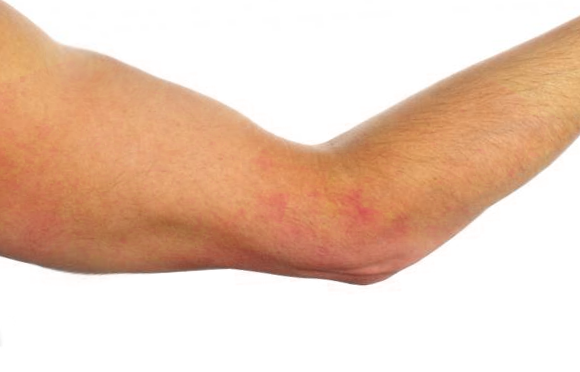
Brachioradial Pruritus. The condition is a localized neuropathic dysesthesia of the dorsolateral upper extremities, often presenting with erythema or skin irritation in the affected area.
Contributed by O Chaigasame, MD
References
Weinberg BD, Amans M, Deviren S, Berger T, Shah V. Brachioradial pruritus treated with computed tomography-guided cervical nerve root block: A case series. JAAD case reports. 2018 Aug:4(7):640-644. doi: 10.1016/j.jdcr.2018.03.025. Epub 2018 Jul 25 [PubMed PMID: 30094306]
Level 2 (mid-level) evidenceHe A, Alhariri JM, Sweren RJ, Kwatra MM, Kwatra SG. Aprepitant for the Treatment of Chronic Refractory Pruritus. BioMed research international. 2017:2017():4790810. doi: 10.1155/2017/4790810. Epub 2017 Sep 19 [PubMed PMID: 29057261]
Pereira MP, Lüling H, Dieckhöfer A, Steinke S, Zeidler C, Ständer S. Brachioradial Pruritus and Notalgia Paraesthetica: A Comparative Observational Study of Clinical Presentation and Morphological Pathologies. Acta dermato-venereologica. 2018 Jan 12:98(1):82-88. doi: 10.2340/00015555-2789. Epub [PubMed PMID: 28902951]
Level 2 (mid-level) evidenceWaisman M. Solar pruritus of the elbows (brachioradial summer pruritus). Archives of dermatology. 1968 Nov:98(5):481-5 [PubMed PMID: 5684218]
Heyl T. Brachioradial pruritus. Archives of dermatology. 1983 Feb:119(2):115-6 [PubMed PMID: 6824345]
Walcyk PJ, Elpern DJ. Brachioradial pruritus: a tropical dermopathy. The British journal of dermatology. 1986 Aug:115(2):177-80 [PubMed PMID: 3741783]
Kavanagh KJ, Mattei PL, Lawrence R, Burnette C. Brachioradial Pruritus: An Etiologic Review and Treatment Summary. Cutis. 2023 Aug:112(2):84-87. doi: 10.12788/cutis.0828. Epub [PubMed PMID: 37820331]
Cao T. Surgical intervention as a viable treatment option for brachioradial pruritus. Journal of spine surgery (Hong Kong). 2023 Sep 22:9(3):245-246. doi: 10.21037/jss-23-58. Epub 2023 Jun 20 [PubMed PMID: 37841783]
Nguyen B, McGuire R, Taylor J. Resolution of brachioradial pruritus following anterior cervical discectomy and fusion: a case report. Journal of spine surgery (Hong Kong). 2023 Jun 30:9(2):195-200. doi: 10.21037/jss-22-90. Epub 2023 Apr 10 [PubMed PMID: 37435323]
Level 3 (low-level) evidenceAlai NN, Skinner HB. Concurrent notalgia paresthetica and brachioradial pruritus associated with cervical degenerative disc disease. Cutis. 2018 Sep:102(3):185;186;189;190 [PubMed PMID: 30372709]
Vestita M, Cerbone L, Calista D. Brachioradial pruritus in a 47-year-old woman treated with pregabalin. Giornale italiano di dermatologia e venereologia : organo ufficiale, Societa italiana di dermatologia e sifilografia. 2016 Dec:151(6):727-728 [PubMed PMID: 27824228]
Pinto AC, Wachholz PA, Masuda PY, Martelli AC. Clinical, epidemiological and therapeutic profile of patients with brachioradial pruritus in a reference service in dermatology. Anais brasileiros de dermatologia. 2016 Jul-Aug:91(4):549-51. doi: 10.1590/abd1806-4841.201644767. Epub [PubMed PMID: 27579762]
Level 2 (mid-level) evidenceFisher DA. Brachioradial pruritus wanted: a sure cause (and cure) for brachioradial pruritus. International journal of dermatology. 1997 Nov:36(11):817-8 [PubMed PMID: 9427072]
Bernhard JD, Bordeaux JS. Medical pearl: the ice-pack sign in brachioradial pruritus. Journal of the American Academy of Dermatology. 2005 Jun:52(6):1073 [PubMed PMID: 15928630]
Goodkin R, Wingard E, Bernhard JD. Brachioradial pruritus: cervical spine disease and neurogenic/neuropathic [corrected] pruritus. Journal of the American Academy of Dermatology. 2003 Apr:48(4):521-4 [PubMed PMID: 12664013]
Massey EW, Massey JM. Forearm neuropathy and pruritus. Southern medical journal. 1986 Oct:79(10):1259-60 [PubMed PMID: 3764525]
Kestenbaum T, Kalivas J. Solar pruritus. Archives of dermatology. 1979 Nov:115(11):1368 [PubMed PMID: 507894]
Wallengren J, Dahlbäck K. Familial brachioradial pruritus. The British journal of dermatology. 2005 Nov:153(5):1016-8 [PubMed PMID: 16225616]
Veien NK, Hattel T, Laurberg G, Spaun E. Brachioradial pruritus. Journal of the American Academy of Dermatology. 2001 Apr:44(4):704-5 [PubMed PMID: 11260554]
Shumway NK, Cole E, Fernandez KH. Neurocutaneous disease: Neurocutaneous dysesthesias. Journal of the American Academy of Dermatology. 2016 Feb:74(2):215-28; quiz 229-30. doi: 10.1016/j.jaad.2015.04.059. Epub [PubMed PMID: 26775772]
Crevits L. Brachioradial pruritus--a peculiar neuropathic disorder. Clinical neurology and neurosurgery. 2006 Dec:108(8):803-5 [PubMed PMID: 16423451]
Binder A, Fölster-Holst R, Sahan G, Koroschetz J, Stengel M, Mehdorn HM, Schwarz T, Baron R. A case of neuropathic brachioradial pruritus caused by cervical disc herniation. Nature clinical practice. Neurology. 2008 Jun:4(6):338-42. doi: 10.1038/ncpneuro0807. Epub 2008 May 6 [PubMed PMID: 18461070]
Level 3 (low-level) evidenceWallengren J, Sundler F. Brachioradial pruritus is associated with a reduction in cutaneous innervation that normalizes during the symptom-free remissions. Journal of the American Academy of Dermatology. 2005 Jan:52(1):142-5 [PubMed PMID: 15627097]
Wallengren J. Self-healing photo-neuropathy and cervical spinal arthrosis in four sisters with brachioradial pruritus. Journal of brachial plexus and peripheral nerve injury. 2009 Nov 17:4():21. doi: 10.1186/1749-7221-4-21. Epub 2009 Nov 17 [PubMed PMID: 19919691]
De Ridder D, Hans G, Pals P, Menovsky T. A C-fiber-mediated neuropathic brachioradial pruritus. Journal of neurosurgery. 2010 Jul:113(1):118-21. doi: 10.3171/2009.9.JNS09620. Epub [PubMed PMID: 19817537]
Atış G, Bilir Kaya B. Pregabalin treatment of three cases with brachioradial pruritus. Dermatologic therapy. 2017 Mar:30(2):. doi: 10.1111/dth.12459. Epub 2017 Feb 6 [PubMed PMID: 28168835]
Level 3 (low-level) evidenceStrowd RE, Strowd LC, Blakeley JO. Cutaneous manifestations in neuro-oncology: clinically relevant tumor and treatment associated dermatologic findings. Seminars in oncology. 2016 Jun:43(3):401-7. doi: 10.1053/j.seminoncol.2016.02.029. Epub 2016 Feb 23 [PubMed PMID: 27178695]
Salako KB, Anstey AA, Logan RA. Delayed, transient, postsolar truncal pruritus: a report of two cases. Clinical and experimental dermatology. 2014 Aug:39(6):726-7. doi: 10.1111/ced.12375. Epub 2014 Jul 1 [PubMed PMID: 24986101]
Level 3 (low-level) evidenceKwatra SG, Stander S, Bernhard JD, Weisshaar E, Yosipovitch G. Brachioradial pruritus: a trigger for generalization of itch. Journal of the American Academy of Dermatology. 2013 May:68(5):870-3. doi: 10.1016/j.jaad.2012.11.026. Epub 2013 Jan 29 [PubMed PMID: 23374230]
Skelton F, Frontera JE. Brachioradial Pruritus as a Harbinger of Syrinx in Chronic Spinal Cord Injury: A Case Report. PM & R : the journal of injury, function, and rehabilitation. 2017 Mar:9(3):311-313. doi: 10.1016/j.pmrj.2016.08.005. Epub 2016 Aug 18 [PubMed PMID: 27546495]
Level 3 (low-level) evidenceShields LB, Iyer VG, Zhang YP, Shields CB. Brachioradial Pruritus: Clinical, Electromyographic, and Cervical MRI Features in Nine Patients. Cureus. 2022 Feb:14(2):e21811. doi: 10.7759/cureus.21811. Epub 2022 Feb 1 [PubMed PMID: 35291549]
Bernstein JE. Capsaicin and substance P. Clinics in dermatology. 1991 Oct-Dec:9(4):497-503 [PubMed PMID: 1726584]
Zeidler C, Lüling H, Dieckhöfer A, Osada N, Schedel F, Steinke S, Augustin M, Ständer S. Capsaicin 8% cutaneous patch: a promising treatment for brachioradial pruritus? The British journal of dermatology. 2015 Jun:172(6):1669-1671. doi: 10.1111/bjd.13501. Epub 2015 Apr 13 [PubMed PMID: 25354282]
Level 3 (low-level) evidencePereira MP, Lüling H, Dieckhöfer A, Steinke S, Zeidler C, Agelopoulos K, Ständer S. Application of an 8% capsaicin patch normalizes epidermal TRPV1 expression but not the decreased intraepidermal nerve fibre density in patients with brachioradial pruritus. Journal of the European Academy of Dermatology and Venereology : JEADV. 2018 Sep:32(9):1535-1541. doi: 10.1111/jdv.14857. Epub 2018 Mar 9 [PubMed PMID: 29427475]
Magazin M, Daze RP, Okeson N. Treatment Refractory Brachioradial Pruritus Treated with Topical Amitriptyline and Ketamine. Cureus. 2019 Jul 10:11(7):e5117. doi: 10.7759/cureus.5117. Epub 2019 Jul 10 [PubMed PMID: 31523548]
Wachholz PA, Masuda PY, Pinto ACVD, Martelli ACC. Impact of drug therapy on brachioradial pruritus. Anais brasileiros de dermatologia. 2017 Mar-Apr:92(2):281-282. doi: 10.1590/abd1806-4841.20175321. Epub [PubMed PMID: 28538902]
Mashoudy KD, Andrade LF, Khalil N, Zhang EH, Wagner JD, Malhotra B, Yosipovitch G. Treatment of Brachioradial Pruritus: A Tertiary Center Retrospective Analysis. Acta dermato-venereologica. 2024 Jun 25:104():adv40246. doi: 10.2340/actadv.v104.40246. Epub 2024 Jun 25 [PubMed PMID: 38916180]
Level 2 (mid-level) evidenceGolden KJ, Diana RM. A Case of Brachioradial Pruritus Treated with Chiropractic and Acupuncture. Case reports in dermatology. 2022 Jan-Apr:14(1):93-97. doi: 10.1159/000524054. Epub 2022 Apr 21 [PubMed PMID: 35702723]
Level 3 (low-level) evidenceWallengren J, Sundler F. Cutaneous field stimulation in the treatment of severe itch. Archives of dermatology. 2001 Oct:137(10):1323-5 [PubMed PMID: 11594856]
Stellon A. Neurogenic pruritus: an unrecognised problem? A retrospective case series of treatment by acupuncture. Acupuncture in medicine : journal of the British Medical Acupuncture Society. 2002 Dec:20(4):186-90 [PubMed PMID: 12512793]
Level 2 (mid-level) evidenceMurase EM, Dulai AS, Marzouk S, Lio PA, Sivamani RK, Murase JE. Rapid clinical response to nemolizumab in dermatologic diseases associated with pruritus and burning: A multicenter case series. Journal of the American Academy of Dermatology. 2025 Aug:93(2):466-468. doi: 10.1016/j.jaad.2025.03.047. Epub 2025 Mar 21 [PubMed PMID: 40122213]
Level 2 (mid-level) evidenceSavk E, Savk SO. On brachioradial pruritus and notalgia paresthetica. Journal of the American Academy of Dermatology. 2004 May:50(5):800-1 [PubMed PMID: 15097973]
Coscarella G, Rosen Y, Singer N, Eyal E, Haimson L, Goren O, Hagai E, Pereira M, Ständer S, Yosipovitch G. Therapeutic unmet needs in brachioradial pruritus. The British journal of dermatology. 2025 Aug 18:193(3):561-563. doi: 10.1093/bjd/ljaf182. Epub [PubMed PMID: 40341860]
Coscarella G, Rosen Y, Singer N, Eyal E, Haimson L, Goren O, Hagai E, Edwards E, Pereira MP, Stander S, Yosipovitch G. Diagnostic unmet needs in brachioradial pruritus. Journal of the American Academy of Dermatology. 2025 Sep:93(3):812-814. doi: 10.1016/j.jaad.2025.05.1373. Epub 2025 May 12 [PubMed PMID: 40368185]
Dhand A, Aminoff MJ. The neurology of itch. Brain : a journal of neurology. 2014 Feb:137(Pt 2):313-22. doi: 10.1093/brain/awt158. Epub 2013 Jun 22 [PubMed PMID: 23794605]
Level 3 (low-level) evidence